Wedding Reception Timeline 2026: Plan It With Your DJ
Planning a wedding reception timeline is the single biggest factor separating a night that flows from one that stalls out after dinner. Get the sequence right with your DJ and every moment — entrance, toasts, dances, open floor — lands when it should.
- A wedding reception timeline built around a 4-5 hour block keeps guests engaged from cocktail hour through last dance.
- Lock toasts, first dance, and parent dances before dinner ends — waiting past dessert kills momentum.
- DJ Brian C recommends a 45-60 minute buffer for dinner service so speeches don’t run into open dancing.
- Skip stacking every tradition back-to-back; space cake cutting, bouquet toss, and garter toss across the night.
- Confirm the last song and send-off time with your DJ at least two weeks before the wedding date.
Why this matters
A reception without a written timeline runs on guesswork, and guesswork is how you end up with a cold dinner, a rushed first dance, and a dance floor that never fills up. Your DJ is the person calling cues all night — announcing entrances, cueing toasts, reading the room for when to drop the tempo. Without a shared timeline, the DJ is reacting instead of leading.
Most 2026 receptions in Maine run 4 to 5 hours from cocktail hour to last call. That's not a lot of time to fit a grand entrance, dinner, four to six speeches, three or four traditional dances, and 90 minutes of open dancing. Every block needs a start and end time, and your DJ needs that document in hand before the wedding day, not improvised at the reception.
What you'll need
- A finalized guest count and venue floor plan
- Ceremony end time and cocktail hour start time
- A list of who's giving toasts (best man, maid of honor, parents) and roughly how long each one runs
- Song picks for the grand entrance, first dance, parent dances, and last song
- A decision on whether you're doing a bouquet toss, garter toss, anniversary dance, or other traditions
- Contact info exchanged between your DJ, planner, and venue coordinator
- If your cocktail hour needs its own mood, review cocktail hour song ideas before you finalize that block
The steps
1. Lock your ceremony end time and cocktail hour window
Everything downstream depends on this anchor point. If the ceremony ends at 4:00 PM, cocktail hour typically runs 60 to 90 minutes while photos wrap up and guests move to the reception space.
Tell your DJ the exact ceremony end time, not an estimate. A 15-minute drift here pushes every later block — dinner, toasts, dancing — later too, and venues with strict end times don't extend the night for you.
Common mistake: couples plan cocktail hour for 45 minutes but photos run 75. Build in a 15-minute buffer so the reception doesn't start behind schedule.
2. Set the grand entrance and first dance order
Decide whether the first dance happens right after the grand entrance or after dinner. Both work in 2026 — immediate-first-dance gets it out of the way while everyone's still standing and attentive; after-dinner-first-dance transitions guests straight into open dancing.
Give your DJ the exact song and any special choreography notes at least two weeks out. If you haven't picked one yet, working through first dance song options now avoids a last-minute scramble the week of the wedding.
Common mistake: picking a song longer than 3.5 minutes for a choreographed dance — most couples run out of steam or steps before the track ends.
3. Schedule dinner service and toasts
Budget 45 to 60 minutes for a plated dinner, 30 to 40 for buffet. Toasts happen either right when guests sit down (before food arrives) or between courses — never during dessert, when half the room is already up refilling drinks.
Cap total toast time at 10 to 12 minutes combined. Three speeches averaging 3 to 4 minutes each keeps energy up; five speeches at 5 minutes apiece turns dinner into a marathon.
Common mistake: no mic check before the reception. Test levels during setup so the best man isn't fumbling with feedback in front of 120 guests.
4. Plan traditional dances and parent dances
Parent dances (father-daughter, mother-son) typically follow the first dance or happen right after dinner, back to back, so guests aren't sitting through multiple slow songs spread across the night. Each one runs 2 to 3 minutes — full songs, not extended cuts, unless you want a longer moment.
Common mistake: picking overly long or slow tracks for every parent dance, which drains room energy right before you need it high for open dancing.
5. Build the open dance floor block
This is the longest stretch of the night, usually 90 minutes to 2 hours. Your DJ needs a sense of your music taste — decades, genres, must-plays, and do-not-plays — but the actual song order should stay flexible so the DJ can read the crowd in real time.
Request one or two floor-filler check-ins with your DJ mid-reception if the dance floor thins out. A good DJ adjusts tempo and genre on the fly rather than sticking rigidly to a pre-built playlist.
Common mistake: handing over a 200-song must-play list with zero flexibility. That ties the DJ's hands and usually kills momentum instead of building it.
6. Time the cake cutting, bouquet toss, and garter toss
Space traditions out instead of clustering them. Cake cutting typically happens right after dinner or as a bridge into open dancing; bouquet and garter toss land later, once the floor is already warm, usually 30 to 45 minutes into open dancing.
If you're including both toss traditions, check bouquet and garter toss song picks so the moment has energy instead of dead air while everyone gathers.
Common mistake: running the bouquet toss immediately after dinner, before the dance floor has any momentum — it falls flat with a half-empty room.
7. Plan the last song and send-off
Decide your ending 15 to 20 minutes before the venue's hard stop, not at the stop itself. A proper last song and send-off (sparklers, exit line, whatever you've chosen) takes coordination time your DJ needs to plan for.
Common mistake: no planned last song at all. The DJ ends up fading out mid-song when the venue cuts the lights, which is a flat way to close a night that took a year to plan.
Build your reception timeline with a pro
Get a custom wedding reception timeline mapped out with DJ Brian C before your date.
Troubleshooting
- Vendor arrival runs late. Build a 15-minute setup buffer into your contract with your DJ so a delayed photographer or caterer doesn't push your entrance time.
- Dinner runs long. Trim toast time, not dance time — cutting 10 minutes from open dancing to save a slow dinner service is the wrong tradeoff on the one night you're paying for a full dance floor.
- Dance floor empties mid-reception. Tell your DJ to shift genre or era immediately rather than waiting out a lull — a stalled floor for more than 10 minutes rarely recovers on its own.
- Sunset photos conflict with reception timing. Flag golden hour photo needs to your DJ and planner during timeline planning, not on the wedding day, so cocktail hour or dinner can flex around a 20-30 minute window.
- Overtime risk. If your timeline is tight against a venue's end time, build a 15-minute cushion before the last song block so send-off doesn't get cut short.
- Guest count changes late. A guest count shift of 20+ people close to the date can change dinner service length — update your DJ and caterer together so toast and dance timing still lines up.
Tools and resources
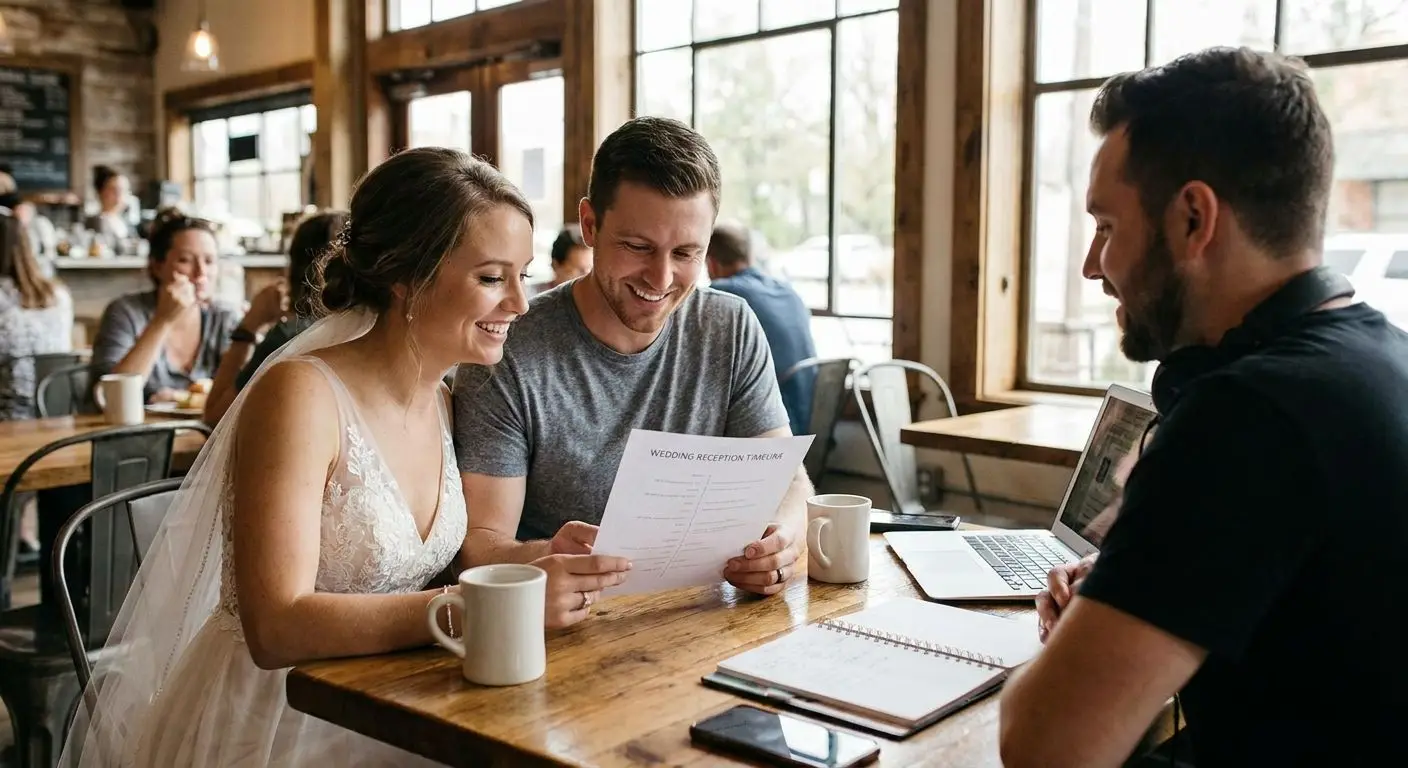
- A written, minute-by-minute reception timeline shared with your DJ, planner, and venue coordinator
- Cocktail hour song list to set the tone before the reception even starts
- First dance song picks if you haven't finalized yours
- Bouquet and garter toss songs for a well-timed tradition block
- A day-of point of contact (planner or venue coordinator) who can relay timeline changes to your DJ in real time
What to do next
Once the timeline skeleton is set, the next decision is how the night actually ends — the last song does more to shape the final impression of your reception than almost any other moment in the timeline. Nail the sequence above first, then move to finalizing your closing song and send-off details with your DJ.
FAQ
How long should a wedding reception timeline be in 2026?
Most wedding receptions run 4 to 5 hours from cocktail hour to last dance in 2026. Shorter receptions of 3 hours work for smaller or budget-conscious weddings but leave less room for a long open dancing block.
What order do wedding reception events go in?
The typical order is grand entrance, first dance, dinner and toasts, parent dances, cake cutting, open dancing, traditions like bouquet and garter toss, and a last song send-off. Some couples move the first dance to right after dinner instead of before it.
How much time should I give toasts at my reception?
Cap total toast time at 10 to 12 minutes combined across all speakers. Three speeches at 3 to 4 minutes each keeps energy up better than five longer speeches.
Should the first dance happen before or after dinner?
Both work — doing it right after the grand entrance gets it done while guests are still attentive, while doing it after dinner transitions directly into open dancing. Pick based on whether you want a quiet moment early or momentum leading into the dance floor.
When should the bouquet and garter toss happen?
Schedule these 30 to 45 minutes into open dancing, once the floor already has energy. Running them immediately after dinner, before the dance floor warms up, usually falls flat.
How far in advance should I give my DJ the reception timeline?
Share a finalized timeline with your DJ at least two weeks before the wedding date. This gives time to flag conflicts, like an overly long toast list or a tight dinner-to-dancing transition.
What happens if my reception runs over the venue’s end time?
Most venues charge overtime fees or cut power and sound at the contracted end time. Build a 15-minute buffer before your last song block so the send-off doesn’t get cut short.
Can my DJ adjust the timeline on the wedding day?
Yes, and it happens often — dinner running 15 minutes long or a dance floor lull are normal. A good DJ adjusts song order and block timing in real time without needing you to manage it.
One last thing
The part of the timeline couples underplan most is the transition out of dinner into dancing. A DJ who calls that shift with the right song and the right energy, rather than just flipping a switch from dinner playlist to dance set, is the difference between a floor that fills immediately and one that takes 20 minutes to warm up. Ask your DJ specifically how they plan that transition — it tells you more about their read on a room than any playlist they'll show you.
Related guides