Wireless Microphone Setup for Speeches
A speech can be heartfelt, funny, formal, or brief, but if guests cannot hear it clearly, the moment loses impact fast. A good wireless microphone setup for speeches is not just about having a mic on hand. It is about choosing the right type, placing it correctly, checking levels early, and making sure the speaker feels comfortable using it.
At weddings, corporate events, anniversaries, and school functions, speeches often happen during the most meaningful parts of the event. A toast from the best man, a welcome from a company leader, or a thank-you from a family member deserves clean, steady sound. When audio is handled properly, people stay engaged and the speaker can focus on the message instead of fighting the equipment.
Why wireless microphone setup for speeches matters
Speech audio is different from music. Music can sometimes cover small flaws, but spoken words need clarity. If a microphone cuts out, feeds back, or sounds weak, guests stop listening almost immediately. That can create awkward pauses and unnecessary stress for the host.
Wireless microphones also add flexibility. Speakers can stand naturally, move to where they are comfortable, and avoid being tied to one spot by a cable. That matters at weddings where people may step out from a head table, at corporate events where presenters need to address a room confidently, and at private celebrations where not everyone is used to speaking in front of a crowd.
Still, wireless does not mean foolproof. Signal interference, dead batteries, poor mic technique, and rushed setup can all cause problems. The difference between a smooth speech and a frustrating one usually comes down to preparation.
Choosing the right wireless microphone for speeches
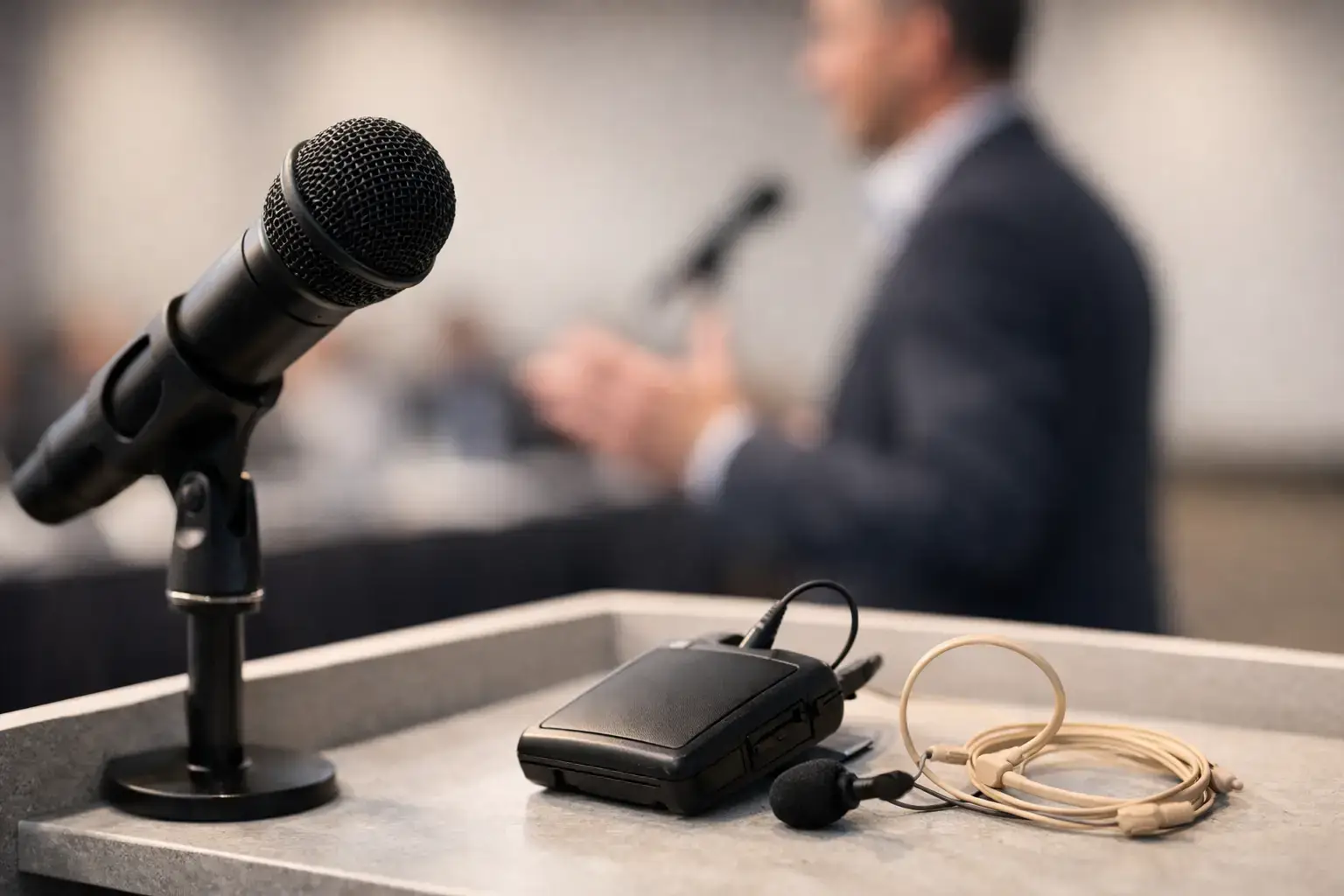
Not every wireless microphone works the same way, and the best option depends on the event. For most speeches, a handheld wireless microphone is the most practical choice. It is familiar, easy to pass between speakers, and simple to control. If multiple people are giving toasts, a handheld mic keeps the process moving without much explanation.
A lapel microphone can work well when a presenter needs both hands free, especially at business events or formal speaking engagements. But lapel mics are more sensitive to clothing placement, speaker movement, and inconsistent volume if the person turns their head often. For social events, they are usually less convenient unless the speaker is staying in one role for an extended time.
Headset microphones offer excellent consistency because the mic stays close to the mouth, but they are rarely the first choice for wedding toasts or formal social speeches. They can feel too performance-focused for a simple announcement or heartfelt toast.
For most event hosts, the practical answer is simple. If the goal is reliable sound for short speeches from different people, use a quality handheld wireless microphone.
Handheld vs. lapel for event speeches
A handheld mic gives better control in unpredictable situations. If one speaker talks quietly and another speaks loudly, an experienced sound operator can adapt quickly. It also helps guests understand when it is their turn to speak because the microphone is visibly being passed to them.
A lapel mic is better when the event has a scheduled presenter and a more structured format. It looks clean, but it requires more setup attention. If it is clipped too low or rubbed by fabric, speech quality drops quickly.
Placement and speaker position make a big difference
Even the best equipment can sound poor if the room setup is wrong. Speakers should never be directly in front of the main sound system while holding a live mic. That is one of the fastest ways to create feedback. A proper setup keeps the person speaking behind or slightly to the side of the main speakers, where the microphone is less likely to pick up amplified sound.
Distance matters too. Many people hold a microphone too far away, especially if they are nervous. For clear speech, the mic should usually stay a few inches from the mouth. Too close can sound heavy and distorted. Too far sounds thin and weak. A quick instruction before the speech often solves this.
Room layout also affects how well a speech carries. A small private party in a dining room needs a different volume and speaker placement than a ballroom wedding or a company banquet. In larger rooms, the system should be set so people at the back can hear clearly without making the front tables feel overwhelmed.
Sound check details that prevent common problems
The best time to fix microphone issues is before guests ever hear them. A proper sound check should include more than turning the mic on and saying hello once. The speaker or host should test normal speaking volume, louder moments, and movement within the area where speeches will happen.
Battery status needs to be checked before the event starts, not halfway through dinner. Frequencies should be confirmed so the wireless system is not competing with other nearby devices. Levels should be adjusted for speech clarity, not just overall loudness.
It also helps to know who will be speaking. If there are several toasts planned, the audio team can be ready for different voices and pacing. A soft-spoken parent and an energetic best friend may need slightly different handling. Good preparation accounts for that without making the process obvious to guests.
A quick speech mic checklist
Before speeches begin, make sure the microphone is tested, batteries are fresh, levels are set for spoken word, and the speaker knows how to hold the mic. It is also smart to confirm where each person will stand and who is handing off the microphone.
That may sound simple, but these details are exactly what keep the event moving smoothly.
Managing multiple speakers without losing momentum
Many events do not have just one speech. Weddings may have a welcome, blessing, maid of honor toast, best man toast, and thank-you remarks from the couple. Corporate functions may rotate between hosts, presenters, and award announcements. Without a plan, the transitions can feel clumsy.
This is where coordinated event support matters. Someone should know the order of speakers, have the microphone ready, and cue the next person at the right time. When speeches flow naturally, the event feels polished. When people are searching for the mic, tapping it, or asking if it is on, the room loses energy.
A dependable MC or DJ helps bridge those moments. That includes making sure the microphone is live when it should be, muted when it should not be floating around the room, and handed off without delay. Guests may not notice that work when it is done well, but they definitely notice when it is not.
Wireless microphone setup for speeches at different events
The needs of a wedding toast are not exactly the same as those of a business presentation. At weddings and anniversaries, the focus is often warmth and emotion. The microphone should feel easy and unobtrusive, with enough volume for the whole room but without a harsh sound that makes the speech feel stiff.
At school events or larger community functions, there may be more background noise and more movement. That calls for extra attention to gain levels and speaker placement. At corporate events, the priority is often crisp intelligibility. Guests need to catch every word, especially if the speech includes names, awards, or important announcements.
The setup always depends on the room, the crowd size, and the event timeline. That is why experience matters. There is no one-button setting that works perfectly in every venue.
What professional setup really changes
People often assume a microphone is either working or not working. In reality, there is a big middle ground between barely functional and truly event-ready. Professional setup means the microphone sounds clear, transitions are smooth, and the event host does not have to troubleshoot anything in real time.
It also means having backup thinking in place. If a speaker talks softly, the system should be ready to adapt. If the speech location shifts, the audio plan should still hold up. If nerves kick in and someone forgets how to use the mic, there should be calm guidance rather than confusion.
That level of preparation is especially valuable during milestone moments that cannot be repeated. A wedding toast, retirement speech, or award presentation happens once. Guests remember the message, but they also remember whether they could hear it.
If you are planning an event and want speeches to sound clear, natural, and stress-free, getting the audio right is worth more than most people realize. A little preparation protects some of the most meaningful moments of the day. Call DJ-BrianC at (207) 212-6560 to book or have your questions answered!