Brewery Beer Festival DJ Maine: 2026 Booking Guide
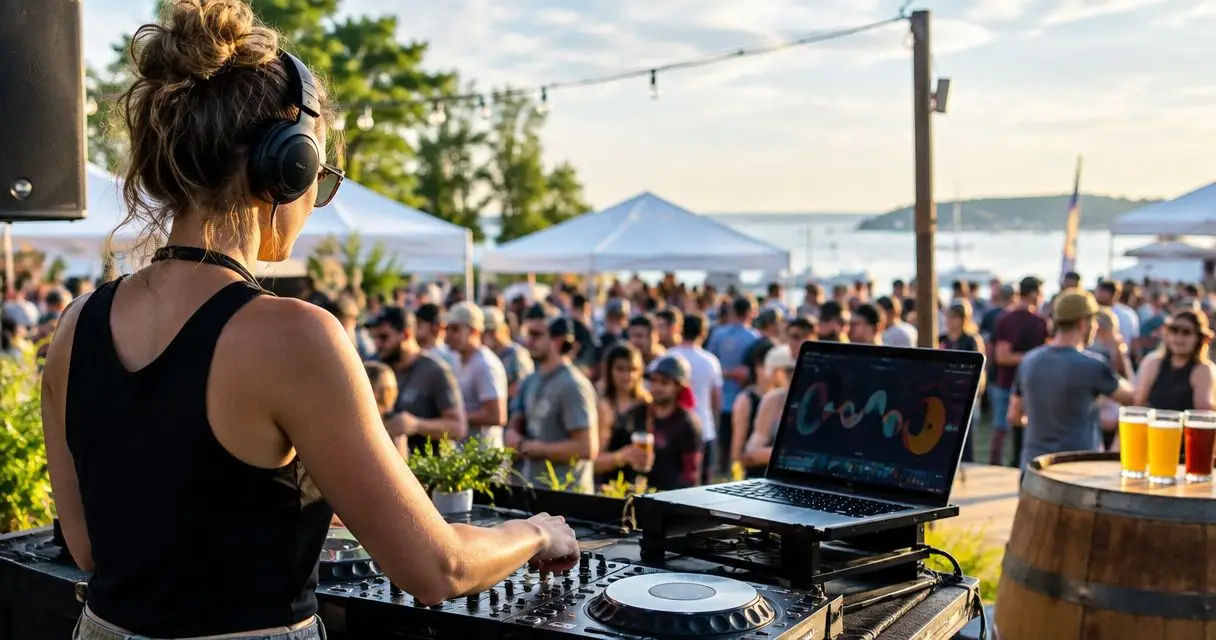
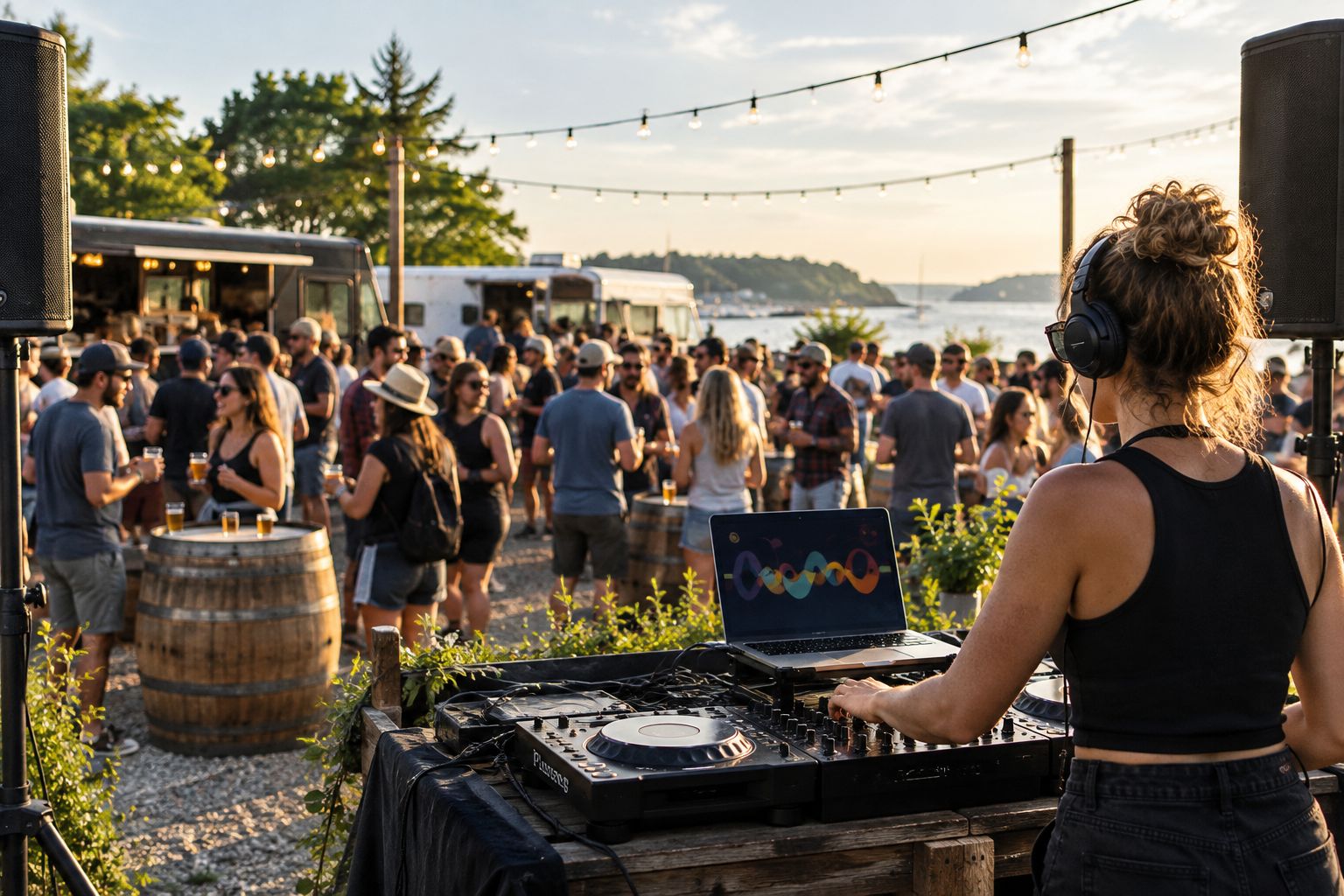
Brewery beer festival DJ coverage in Maine means booking a DJ who can run sound across an outdoor festival footprint, keep pours and announcements moving, and read a crowd that turns over every 20 minutes instead of sitting through a four-hour reception. Beer festivals and taproom block parties in 2026 need a different skill set than a sit-down wedding: more square footage to cover, more ambient noise from pour lines and food trucks, and a schedule built around brewer talks, trivia, and last-call announcements rather than a bouquet toss.
- Brewery beer festival DJ Maine bookings need coverage-based sound, not just wattage, because festivals sprawl across parking lots, tents, and taprooms.
- DJ BrianC runs outdoor-rated sound and MC announcements for brewery events across Maine in 2026 – best for organizers who need one vendor for music and crowd flow.
- Backup equipment matters more at outdoor festivals than at any indoor wedding – a single generator hiccup can silence an entire beer garden.
- Session-based music arcs (not one long playlist) keep energy matched to pour times, brewer talks, and last-call windows.
Why this matters for brewery and beer festival organizers
A wedding DJ plans one dance floor. A brewery festival DJ plans sound zones – the beer garden, the food truck row, the stage where a brewer gives a talk, and the parking lot where the line snakes toward will-call. Maine's outdoor festival season runs roughly May through October, and most of it happens rain-or-shine on grass, gravel, or asphalt with no indoor fallback.
That changes what "good sound" means. A festival DJ needs coverage across an open footprint, not just volume at one point, and needs to run a microphone for brewery staff, sponsors, and raffle announcements between sets. The DJ who nails a 150-guest wedding reception is not automatically the right pick for a 1,500-person beer festival on a brewery's back lot.
Scope the footprint before you book
Organizers who book sound last-minute usually underbuy coverage. Walk the site plan before calling anyone.
- Measure the longest distance from the stage or DJ booth to the farthest beer line
- Note hard surfaces (pavement, brewery walls) that cause echo versus open field that swallows sound
- Flag any tent walls or barn structures that block line-of-sight speaker throw
- Confirm whether music needs to reach a second zone (VIP tent, food court) separately
- Check if the town permit caps decibel levels at a property line
Match sound coverage to crowd size, not just square footage
A 2,000-square-foot lawn with 200 people needs different coverage than the same lawn with 2,000 people, because bodies absorb sound. Undersized systems get muddy the moment a crowd fills in.
- Ask any vendor for their max-coverage rating in square feet, not just speaker wattage
- Plan for at least one delay speaker if the footprint runs longer than 100 feet
- Budget for a second zone speaker if food trucks or a beer garden sit apart from the main stage
- Test sound during a walkthrough, not just on paper
Build a rain and wind contingency plan
Maine festivals run through unpredictable spring and fall weather. A soaked cable run or a gust that tips a speaker stand shuts a festival down fast if there's no backup.
- Confirm every speaker and mixer on site is rated for outdoor use or fully covered
- Ask what the wind-load rating is on speaker stands and truss, if any is used
- Have a covered or tented DJ booth location confirmed in the site plan, not improvised on the day
- Request a written contingency plan for moving the setup indoors if the brewery has taproom space
This is also where backup equipment redundancy planning pays off – a second amp, a spare wireless mic, and a backup power source keep an outdoor festival running when one component fails mid-afternoon.
Coordinate announcements with brewery staff and vendors
A festival DJ is running the PA for more than music – brewer talks, raffle drawings, last-call warnings, and sponsor shout-outs all route through the same system.
- Get a run-of-show from the brewery or festival organizer at least a week out
- Confirm who hands the microphone off for scheduled talks or toasts
- Build in a 15-minute buffer before any timed announcement (last call, raffle draw)
- Assign one point of contact on brewery staff for day-of schedule changes
Set the music arc across festival hours
A six-hour beer festival is not one playlist. Energy needs to track pour times, not run flat from noon to close.
- Open with lower-energy, conversational music during early pours and check-in
- Build tempo through mid-afternoon as the crowd fills in
- Drop energy briefly for scheduled brewer talks or trivia
- Peak the set in the final 90 minutes before last call
- Close with a clear last-call announcement paired with a final song cue
DJ BrianC builds these session arcs for brewery and taproom clients across Maine, matching tempo to pour schedule instead of running one static set. For a brewery marking a milestone rather than running a public festival, the approach for brewery and taproom anniversary parties leans more toward a curated evening set than an all-day festival arc.
Confirm power and noise ordinance compliance
Maine towns vary on outdoor event noise limits, and breweries operating near residential zones face tighter cutoff times than a rural festival ground.
- Confirm the town's noise ordinance cutoff time in writing before booking
- Verify amperage available at the site versus what a full sound and lighting rig draws
- Ask whether a generator is needed and who supplies it
- Get sign-off from the brewery on any speaker placement near property lines
Lock the booking early for peak festival months
Maine's brewery festival season clusters heavily in June through September, and the same DJs organizers want are also booked for weddings on the same summer weekends.
- Reach out to a DJ vendor 60-90 days ahead of a summer festival date
- Confirm the vendor has done outdoor multi-zone events before, not just indoor receptions
- Ask for references from at least one brewery or outdoor festival client
- Get the contract in writing with load-in time, coverage zones, and end time specified
Comparing DJ and sound options for brewery festivals
| Option | Best for | Key limitation |
|---|---|---|
| DIY playlist and rented PA | A small taproom gathering under 75 guests | No MC for announcements, no backup gear, one point of failure |
| Local solo DJ (no crew) | Single-zone events with a small footprint | Struggles to cover multi-zone festivals or run vendor announcements solo |
| Full-service event DJ (DJ BrianC) | Multi-zone brewery festivals needing music plus MC and announcement support | Requires advance booking during peak summer festival months |
| Live band | Breweries wanting a specific genre performed live | Fixed setlist, limited flexibility to shift energy zone to zone |
| Touring national DJ act | Large-scale, multi-day beer festivals with headline booking budgets | Overkill and inflexible scheduling for a single-day brewery event |
Verdict: for a Maine brewery running a single-day festival with 500-2,000 attendees, a full-service event DJ who has run multi-zone outdoor sound before is the safer buy than a solo DJ or a DIY playlist setup.
Plan your brewery festival sound now
Lock in coverage, MC support, and backup gear before peak 2026 festival dates fill.
Common mistakes brewery festival organizers make
- Booking sound coverage for the wrong footprint. Organizers quote square footage from the parking lot layout, then add a beer garden tent nobody accounted for on the day.
- Skipping the backup power conversation. A single generator failure at 3 p.m. on a festival's busiest hour is far more costly than the same failure at an indoor wedding.
- Treating the DJ as music-only. Festivals need someone running raffle draws, brewer talk cues, and last-call timing – hire for that skill, not just song selection.
- Booking too late for peak months. June through September fills fast in Maine because the same vendors are working weddings the same weekends.
- Ignoring the noise ordinance until the week of the event. A cutoff time discovered on-site forces a scramble to shorten the set with no warning to attendees.
FAQ
What does a brewery beer festival DJ in Maine actually do beyond playing music?
A brewery festival DJ runs the PA system for the full event footprint, handles MC duties like raffle draws and last-call announcements, and paces the music energy to match pour schedule and brewer talks. It is closer to running sound production than a standard wedding set.
How far in advance should a brewery book a festival DJ in Maine?
Book 60-90 days ahead for a summer festival date, since June through September is peak season for both breweries and event DJs across Maine. Waiting until a few weeks out limits which vendors have outdoor multi-zone experience still available.
Is a solo DJ enough for a multi-zone brewery festival?
A solo DJ can cover a single-zone taproom gathering under roughly 75 guests, but a festival with a beer garden, food truck row, and stage area needs coverage planning a solo setup usually can’t handle alone. Multi-zone events need a vendor built for delay speakers and separate audio zones.
What happens if it rains during an outdoor brewery festival?
Outdoor-rated speakers and a covered or tented booth location handle light rain, but heavy weather needs a written contingency plan to move indoors if the brewery has taproom space. Confirm this plan before the event, not during the storm.
Does a brewery festival DJ handle announcements and raffles, or just music?
A full-service event DJ runs both – music programming and microphone duties for brewer talks, sponsor shout-outs, and raffle drawings. Confirm this scope in writing before booking, since some vendors quote music-only packages.
How is a brewery anniversary party different from a public beer festival booking?
A brewery anniversary party is typically a single-zone evening event with a curated set, while a public festival spans multiple zones across several hours with a session-based music arc. The sound and MC needs scale up significantly for the festival format.
What noise restrictions apply to outdoor brewery events in Maine?
Noise ordinance cutoff times vary by town and are often tighter for breweries near residential zones. Confirm the local cutoff time in writing before the event date is locked, since it directly affects how the closing set is timed.
What backup equipment should a brewery festival require from its DJ?
At minimum, a spare wireless microphone, a backup amplifier, and an alternate power source, since outdoor festivals have no indoor fallback if one component fails. This redundancy matters more at a festival than at almost any other event type.
One last thing
The detail organizers skip most often is the microphone hand-off plan – deciding in advance exactly who passes the mic for brewer talks, sponsor mentions, and last call. Without it, a festival's best-run sound system still produces an awkward scramble the moment someone needs to grab attention across a crowd spread over an acre of lawn.
Related guides
- DJ for community festivals and town events
- DJ for county and agricultural fair events
- DJ for Maine lobster bake celebrations