
How to Choose Wedding Reception Music
The fastest way to tell whether a reception feels flat or unforgettable is the music. If you are wondering how to choose wedding reception music, the right answer is not just picking songs you like. It is building the right energy for each part of the evening, keeping your guests involved, and making sure the celebration feels like you from the first entrance to the final dance.
A great reception soundtrack does more than fill silence. It supports the timeline, gives people confidence to get on the dance floor, and helps the night flow without awkward lulls. That is why music planning works best when you think beyond a playlist and focus on the full guest experience.
Start with the kind of reception you want
Before you choose specific songs, decide what you want the room to feel like. Some couples want an elegant, polished evening with a gradual build into dancing. Others want a high-energy party that gets moving early. Many want a mix of both.
This step matters because the best music for one wedding can feel completely wrong at another. A formal ballroom reception may need a different opening approach than a casual barn wedding or a waterfront celebration. Your personalities, venue, guest mix, and timeline all affect what will work.
Think in terms of atmosphere. Do you want cocktail hour to feel relaxed and social? Do you want dinner music that stays present but does not overpower conversation? Do you want the dance floor to lean toward current hits, throwbacks, country, classic rock, or a little of everything? When you answer those questions first, song choices become much easier.
How to choose wedding reception music for each part of the night
One of the most common mistakes couples make is treating reception music as one big category. In reality, each part of the evening needs its own approach.
Grand entrance and early reception moments
Your entrance song sets the tone immediately. If you want excitement, this is the time for it. If you want something classy and upbeat without feeling over the top, that can work too. The key is choosing music that matches your personality and the style of your reception.
If you are doing introductions for the wedding party, each song should feel fun without turning the moment into chaos. This is where planning matters. Good music choices help the energy rise while still keeping things organized.
Dinner music
Dinner music should support the room, not compete with it. Guests should be able to talk comfortably, hear speeches clearly, and still feel that the celebration has momentum. Mid-tempo songs, familiar classics, acoustic covers, light pop, jazz-influenced tracks, and soft country often work well here.
This is also where many couples overthink things. You do not need every dinner song to be deeply meaningful. You need music that fits the mood and keeps the evening moving naturally.
Special dances
Your first dance, parent dances, and any spotlight dances deserve extra attention because they are personal moments people remember. Choose songs that mean something to you, but be honest about length. A beautiful song can feel long in front of a crowd if it runs well past four minutes.
If you love a longer song, consider using an edited version. That way you keep the meaning without making the moment drag. This is a simple adjustment that can make the reception feel much more polished.
Open dancing
This is where crowd awareness becomes just as important as your personal taste. A packed dance floor usually comes from variety, smart pacing, and reading the room. You may love a very specific genre, but if your guest list ranges from grandparents to college friends, the music needs range.
That does not mean your reception has to feel generic. It means the best dance sets usually blend your favorites with songs that different age groups recognize and respond to. When the music feels inclusive, guests stay engaged longer.
Balance your taste with your guests
A wedding reception is personal, but it is also a hosted event. That balance matters when deciding how to choose wedding reception music. You want the night to reflect you, but you also want people to have fun.
The easiest way to handle this is to separate must-play songs from guest-friendly dance music. Pick the songs that define your style, your relationship, and the moments that matter most to you. Then leave room for music that connects with the wider crowd.
There is always a trade-off. If you build the entire night around a narrow niche of music, it may feel very personal but less interactive for guests. If you only choose broad crowd-pleasers, the reception may feel fun but less like your celebration. The sweet spot is a well-planned mix.
Build a do-play and do-not-play list
A strong music plan is not just about favorites. It is also about avoiding songs that would pull you out of the moment.
Your do-play list should include key songs, favorite genres, and a few artists that fit your vision. Your do-not-play list is just as useful. If there are songs you are tired of hearing, genres you dislike, or tracks tied to bad memories, say so clearly.
This is especially helpful for couples who have heard the same wedding songs at multiple receptions and want a fresher feel. It also helps avoid last-minute requests that do not fit your event.
Consider your guest list honestly
Guest count and guest makeup affect music choices more than many couples expect. A wedding with mostly family may respond differently than one with a younger crowd. A mixed-age group often needs a broader music strategy. Cultural traditions, regional preferences, and family expectations can also shape what belongs in the mix.
That does not mean you need to please every single person. It means you should understand who will be in the room. If your guests love to dance, you can lean more heavily into high-energy sets. If they are more reserved, a gradual build may work better than launching straight into club-style songs.
Experienced entertainment professionals pay attention to this because great reception music is not only programmed in advance. It is also adjusted in real time based on how guests respond.
Timing matters as much as song choice
Even great songs can fall flat if they arrive at the wrong moment. A slow ballad too early can stall the room. High-energy dance songs during dinner can feel pushy. Back-to-back songs from the same tempo or style can wear people out.
That is why reception music should be planned with the event timeline in mind. The strongest nights usually build in stages. Guests arrive and settle in. Energy rises through introductions and formalities. Dinner gives the room breathing space. Special dances create emotional moments. Then open dancing takes over and the pace shifts upward.
When the timing is right, the reception feels easy for everyone. Guests may not notice the structure, but they feel it.
How to work with a DJ when choosing wedding reception music
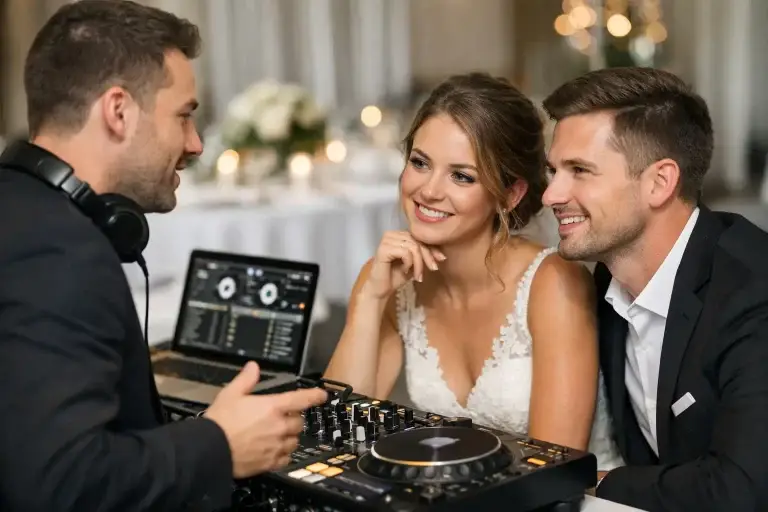
If you are hiring a DJ, one of the biggest benefits is guidance. A professional DJ is not there just to press play. They help shape the flow of the evening, organize key moments, and steer the music so the reception feels coordinated instead of random.
Come prepared with your must-play songs, your no-play list, your favorite genres, and any songs tied to traditions or family expectations. Then be open to feedback. Some songs are perfect for a first dance but not for a dance floor. Some are widely requested but not ideal for your crowd. Some genres work best in short bursts rather than long stretches.
This is where experience really shows. A seasoned DJ can help you avoid common problems, like choosing songs that are too slow for transitions, too unfamiliar for the crowd, or too similar in tempo to keep energy moving.
For couples planning in Maine or nearby New Hampshire, this kind of support can remove a lot of stress because entertainment affects so many parts of the night, from introductions and announcements to pacing and guest engagement.
Keep the plan flexible
The best music plans are specific, but not rigid. You should absolutely identify your priority songs and the overall style you want. At the same time, it helps to leave room for adjustments based on the room, the timing, and how guests are reacting.
Maybe your family fills the dance floor for Motown and 80s favorites. Maybe your friends respond better to 2000s throwbacks and country singalongs. Maybe one planned segment needs to be shortened because dinner ran late. Flexibility keeps the celebration feeling natural instead of forced.
That is often the difference between a reception that sounds good on paper and one that truly works live.
A practical way to make your final decisions
If you feel stuck, narrow your planning to five categories: songs for entrances, songs for dinner, songs for special dances, songs that will definitely fill the dance floor, and songs you do not want played. That gives you a clear framework without turning the process into homework.
Once those pieces are in place, the rest becomes easier. You are no longer trying to choose every track for the night. You are shaping the key moments and giving your entertainment team a strong direction.
Wedding reception music should feel personal, comfortable, and fun to share with the people you care about most. When you plan for the mood of the night instead of just a list of favorite songs, the whole celebration tends to feel smoother. If you want experienced help building a reception that sounds great and stays on track, Call DJ-BrianC at (207) 212-6560 to book or have your questions answered!