Best DJ Equipment for Small Parties in 2026: Ranked
Small private party venues don't need arena-grade rigs — they need gear sized to the room, quiet neighbors, and a setup that survives a folding table doubling as a DJ booth. Here's the ranked breakdown of dj equipment for small parties in 2026, and where hiring a Maine DJ beats buying anything at all.
- A pair of 8-inch powered speakers covers most private party venues under 1,500 square feet — bigger rigs are wasted money.
- Wireless mic systems with roughly 100 feet of range handle toasts and party games without dead spots.
- Portable uplighting fixes small-venue ambiance faster than a full DJ booth setup and packs into one bag.
- A backup media source is the cheapest insurance against a dead laptop mid-party — DJ BrianC never runs one deck.
- For a one-off event, hiring a professional DJ for small parties costs less stress than owning gear you’ll use once.
Why this matters
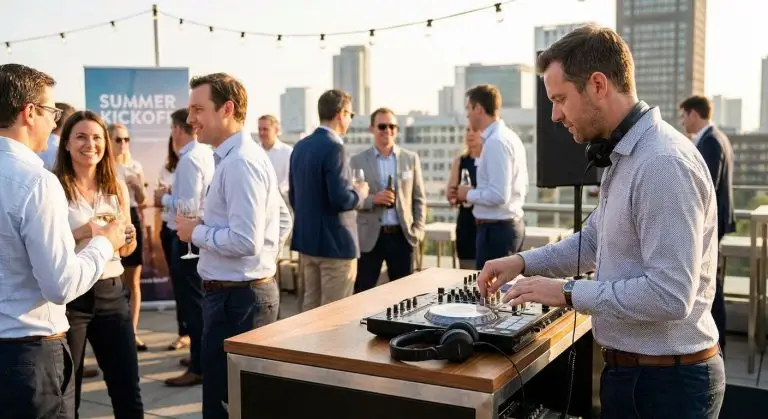
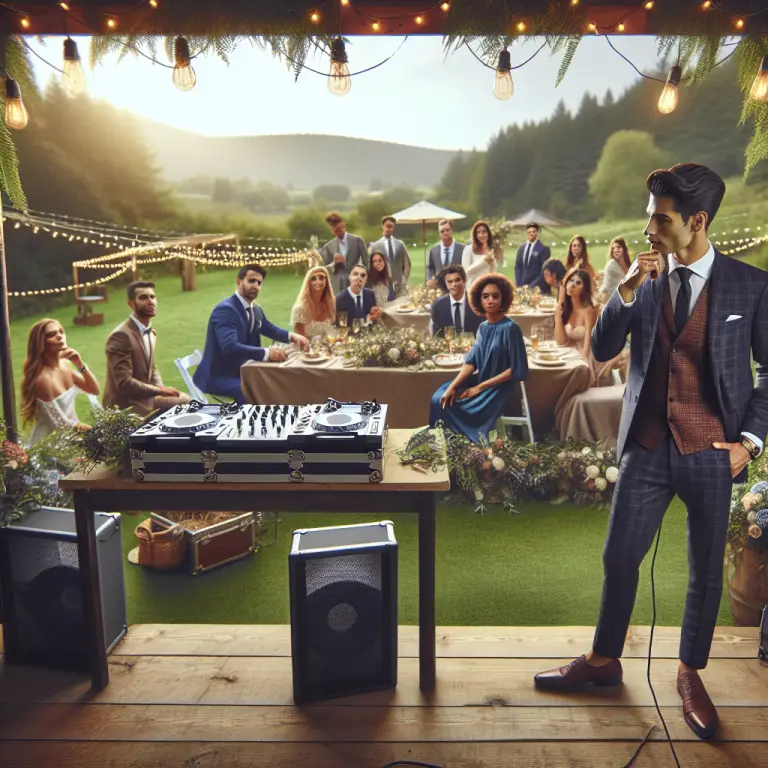
Buy gear built for a 300-person ballroom and you'll spend the night fighting a rig that's too loud for a living room and too complicated for whoever's manning the laptop between toasts. Small private party venues — a rented hall, a backyard tent, a function room at a restaurant — reward compact, fast-to-deploy equipment over raw power.
The categories below get ranked the way DJ BrianC evaluates gear for events like baby shower and gender reveal parties: room size first, guest count second, setup time third. Anything that fails those three tests gets a Skip, no matter how good the spec sheet looks.
How we ranked
Each category below is scored against three questions that actually matter for a small venue: does it fit a room under 1,500 square feet without overpowering it, can one person set it up in under an hour, and does it survive a power outlet that's shared with the caterer's warming trays? Gear that needs a sound tech, a dedicated 20-amp circuit, or two hours of cable runs gets marked down regardless of audio quality.
The rankings also weigh 2026 realities: more private parties are happening in backyards, converted garages, and rented function rooms rather than dedicated event halls, which means portability and noise control matter more than raw wattage.
The ranked list
1. Compact powered PA speakers — the safe pick
A pair of 8-inch powered speakers is the backbone of dj equipment for small parties, and it's the one category worth owning outright if you host more than once a year. These units typically deliver 150 to 300 watts each, which covers a room under 1,500 square feet without distortion at party volume. Set two on stands, angle them toward the crowd, and you've solved 80% of the sound problem in one purchase. Buy if you're hosting recurring events; Skip ownership for a single wedding-adjacent event and rent instead.
2. Subwoofer add-on — the wildcard
A single 10-inch or 12-inch subwoofer adds low-end punch for dance-heavy playlists, but most small venues don't have the square footage or the neighbors' patience for it. Apartment complexes and shared-wall function rooms often cap bass output after a certain hour in 2026 noise ordinances, which makes a sub a liability more than an upgrade. Hold off unless the venue explicitly allows heavier bass and the guest list skews toward a dance floor.
3. Wireless microphone system — the MC's best friend
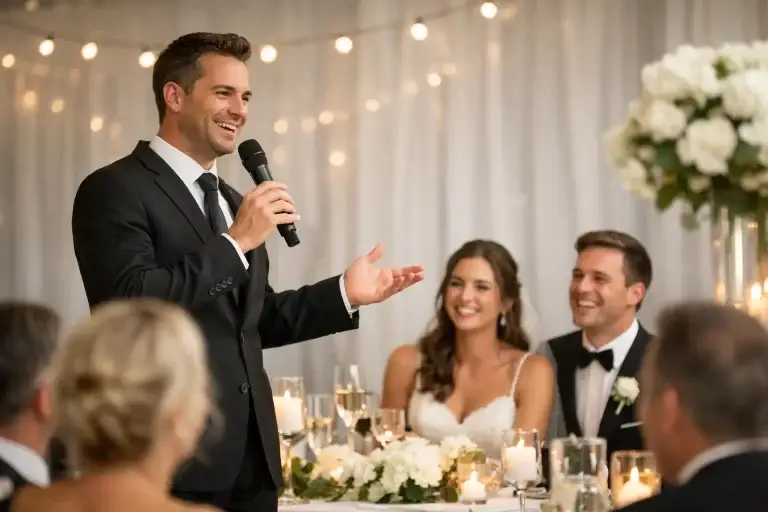
A dual-channel wireless mic system with roughly 100 feet of indoor range covers toasts, game announcements, and karaoke moments without anyone tethered to a cord. This is non-negotiable for events built around speeches or group participation, including a karaoke DJ for birthday parties setup where the mic gets passed around all night. Buy — this is the cheapest gear on the list that prevents the most common small-party audio failure: someone mumbling into a dead mic.
4. Portable LED uplighting — the mood-setter
Four to six battery-powered LED uplights, placed along walls or behind a dessert table, change the feel of a rented room faster than any other single purchase. They pack into one small case, run on rechargeable batteries for a full event, and need zero wiring. For inspiration on pairing lighting with a small-venue reception feel, the same logic behind wedding reception lighting packages scales down cleanly. Buy — low cost, high visual return.
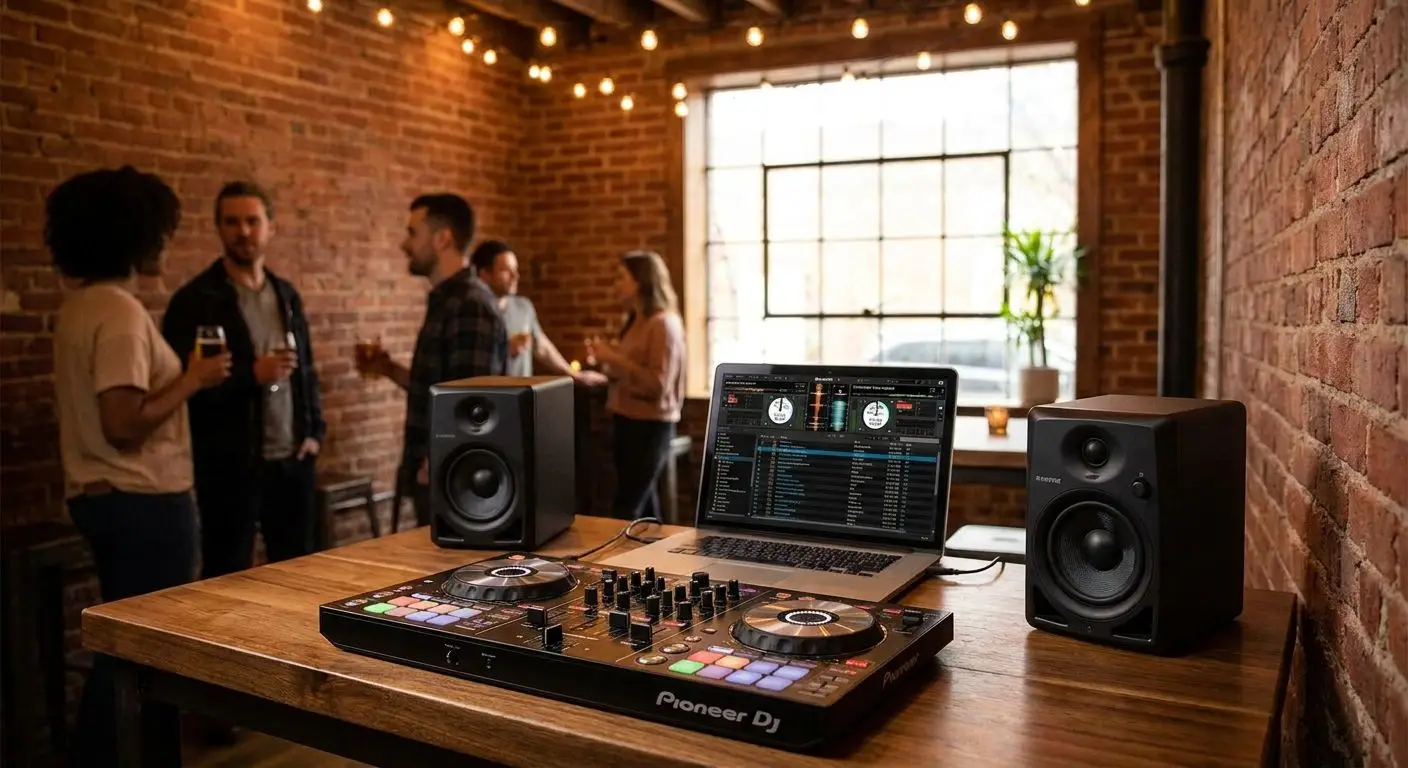
5. All-in-one DJ controller/mixer — the command center
A single controller with a built-in mixer replaces separate turntables, a mixer, and extra cabling — ideal for a small footprint. For a host running their own playlist off a laptop, a basic two-channel controller is overkill; a laptop with a mixing app and a simple audio interface does the same job for less money and less to learn. Wait on a full controller unless you're planning to DJ regularly; for a single small party, Skip it.
6. Backup media source — the insurance policy
A second laptop, tablet, or even a phone loaded with the full playlist and offline downloads is the difference between a five-minute hiccup and a dead dance floor. Professional setups, including intimate events like an elopement or micro-wedding, never run on a single point of failure. Buy — this costs nothing if you already own a second device and saves the entire event if the main one crashes.
7. Full DJ booth facade and truss lighting — the overkill
A branded facade and hanging truss lights look great on Instagram for a 200-guest ballroom reception, but they take up floor space most small venues don't have and add 30-plus minutes to load-in. For a room hosting 20-75 guests, a slim table with a table scrim does the same visual job in a tenth of the setup time. Skip — the return on a small footprint doesn't justify the truck space or the labor.
Skip the gear, book the DJ
DJ BrianC brings speakers, mics, and lighting sized right for your Maine venue.
Comparison table
| Equipment | Best for | Setup time | Verdict |
|---|---|---|---|
| Compact powered PA speakers | Rooms under 1,500 sq ft | 20-30 min | Buy |
| Subwoofer add-on | Dance-heavy playlists, permissive venues | 10-15 min | Hold |
| Wireless mic system | Toasts, games, karaoke | 5-10 min | Buy |
| Portable LED uplighting | Any small rented room | 15-20 min | Buy |
| All-in-one DJ controller | Regular hosts, not one-off events | 15-25 min | Wait |
| Backup media source | Every event, no exceptions | 0 min (pre-loaded) | Buy |
| Full DJ booth facade + truss | Large-format receptions | 30-45+ min | Skip |
Where this leaves you
Buying every item on this list runs into real money fast, and most of it sits unused between events. Three rules keep the decision simple:
- Own the cheap, high-return items — mics, uplighting, and a backup laptop cost little and solve the most common failures.
- Rent or skip the expensive, low-frequency items — subwoofers and full booth setups only pay off if you're hosting multiple events a year.
- Hire out the coordination — a professional handles the speaker placement, mic checks, and playlist pacing that gear alone doesn't solve; that's the gap events like a baby shower or gender reveal party run into when the DIY rig is right but nobody's running it.
FAQ
What’s the best dj equipment for small parties?
A pair of 8-inch powered speakers, a wireless mic system, and portable LED uplighting cover most small private party venues in 2026. Skip subwoofers and full booth setups unless the room and guest list justify the extra footprint.
How many watts do I need for a small party venue?
150 to 300 watts per speaker handles a room under 1,500 square feet at normal party volume. Going higher risks distortion complaints in shared-wall or apartment-style venues.
Is renting DJ equipment better than buying for a one-time event?
Renting is almost always better for a single event since the gear sits unused afterward. Buying only makes sense for mics, lighting, and backup devices you’ll reuse for future gatherings.
How much space do I need for a small DJ setup?
A compact rig with two speakers, a mixer or controller, and a mic stand fits in roughly a 6-by-4-foot footprint. That’s small enough for a corner of most rented function rooms or a backyard tent.
Do I need a subwoofer for a small private party?
Most small venues don’t need one, and many noise ordinances or shared-wall venues restrict heavy bass after a set hour. Add a subwoofer only if the venue explicitly allows it and the event centers on dancing.
What’s the biggest mistake people make with small-party DJ gear?
Running the whole event off one laptop with no backup media source is the most common failure. A second device pre-loaded with the playlist prevents a dead dance floor if the main one crashes.
Can I DJ my own small party instead of hiring someone?
Yes, with a compact speaker pair, a wireless mic, and a pre-built playlist, most hosts can run a small party themselves. The tradeoff is pacing and troubleshooting — a professional handles both without pulling a host away from their own event.
How early should I set up DJ equipment before a small party?
Plan for 45 to 60 minutes for a compact rig including sound check. Add 15 minutes if lighting is part of the setup.
One last thing
The single most-skipped item on every DIY small-party checklist is the backup media source — not the speakers, not the lights. A dead laptop with no second device loaded turns a $200 speaker setup into dead silence for however long it takes to find a phone charger and re-download a playlist. Spend the five minutes loading a backup before worrying about wattage.
Related guides
- Karaoke DJ for birthday parties
- DJ for elopements and micro-weddings
- Best wedding reception lighting packages and ideas
- DJ for baby showers and gender reveal parties