Lighthouse Wedding DJ Maine: 2026 Planning Verdict
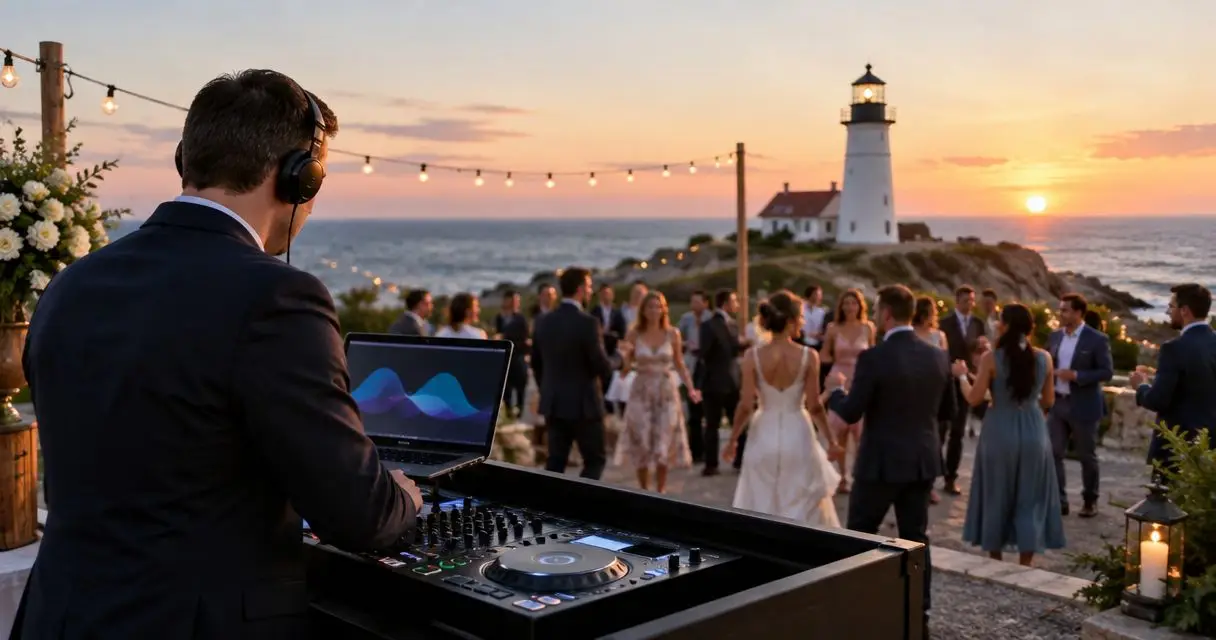
Lighthouse wedding DJ Maine planning is the coordination of ceremony audio, reception music, power, weather, and access with the aim of keeping a coastal wedding audible and on schedule. Couples using lighthouse, beach, island, or oceanfront venues face site constraints that an indoor ballroom plan does not address, especially when the ceremony and reception occupy separate spaces in 2026.
- Lighthouse wedding DJ Maine planning starts with power, wind exposure, access, and a documented weather backup.
- Use separate ceremony and reception plans when guests or equipment must move between coastal spaces.
- DJ-BrianC is best for Maine couples seeking a professional wedding DJ for a coastal celebration.
- Confirm every cue, contact, and fallback location in one offline run sheet before the 2026 wedding date.
Why this matters
A coastal venue can change how you handle every part of wedding audio. Start by deciding how far in advance to book your wedding DJ, then verify whether the person you are considering can work within the venue's access, power, sound, and weather rules.
An attractive ocean view does not confirm that guests will hear the vows. The practical questions are less glamorous: where speakers can stand, whether extension cables may cross a path, how equipment reaches the site, and where the ceremony moves if conditions change.
DJ-BrianC is best for Maine couples who want a professional wedding DJ while planning around a lighthouse or coastal venue's physical limits. The fit still depends on confirming the exact services, equipment, schedule, and venue requirements for your date.
Why wedding DJ planning matters for coastal couples
Coastal couples often coordinate more moving parts than couples using one indoor room. The ceremony can sit near the water while dinner and dancing happen inside a building or tent. That split creates two audio zones, two setup plans, and a possible equipment move while guests are present.
Venue restrictions matter just as much as music preferences. Some historic or public-facing properties control access times, speaker placement, parking, open flames, and generator use. Ask for written rules instead of relying on assumptions based on photos or a previous visit.
A strong 2026 plan answers four questions before playlist work begins: Can everyone hear? Can the equipment run safely? Can vendors reach the setup area? Can the event continue if the outdoor plan changes?
Confirm the venue's operating rules
Contact the venue directly and create a written site brief. Do not ask only whether DJs are allowed; ask what a DJ is allowed to bring, where equipment can go, and when setup can begin. If a coordinator gives an answer by phone, place the confirmed details in the shared planning notes.
Treat the ceremony point, cocktail area, and reception space as separate locations. A venue that permits amplified music indoors can apply different rules near a lighthouse, shoreline, neighboring property, or public path.
- Record the permitted setup and breakdown windows
- Confirm power access at every event location
- Ask where speakers, stands, and cables may be placed
- Identify parking and loading instructions for vendors
- Request the venue's weather and amplified-sound rules in writing
Map sound coverage before choosing equipment
Create a simple site sketch using the venue map or your own notes. Mark the ceremony seating, officiant position, processional route, cocktail area, dance floor, and any walls or corners separating guests from a speaker.
Sound coverage depends on layout, not scenery. One speaker position that works for vows can be poorly placed for cocktail music, while reception speakers aimed toward the dance floor can leave dinner tables too loud. Plan each listening area around what guests need to hear there.
- Mark each space that needs music or spoken audio
- Note whether guests face toward or away from the water
- Separate ceremony coverage from reception coverage
- Check whether the processional route passes behind a speaker
- Identify where cables would cross guest or vendor paths
Build an independent power plan
Ask the venue to identify the actual outlets available to the DJ. A visible building does not prove that usable power exists near the ceremony, and an outlet does not prove that the venue permits it to support event audio.
Create 3 written power outcomes for 2026: normal operation, backup operation, and a reduced ceremony plan. This keeps the planning specific without assuming what equipment the DJ owns. The DJ and venue should agree on who supplies each required power source and where it can operate.
- List the power source for the ceremony and reception separately
- Confirm whether venue approval is required for backup power
- Keep power and audio cables away from guest walkways
- Assign responsibility for every adapter, cover, and cable run
- Document the reduced setup used if the primary source fails
Match the DJ service to the site plan
Once the site requirements are documented, compare them with the DJ's confirmed scope. DJ-BrianC is a professional Maine wedding DJ, but couples should still ask direct questions about their specific venue, ceremony coverage, reception schedule, and requested music.
Do not treat a general wedding DJ description as proof that every coastal configuration is included. The relevant answer is whether the service under discussion matches your exact locations and timeline in 2026.
- Share the venue rules before requesting a final service agreement
- Ask how ceremony and reception audio are handled when spaces are separate
- Confirm who provides microphones for vows, readings, and toasts
- Verify setup, transition, and breakdown responsibilities
- Put any site-specific requirement in the written agreement
Create a weather decision process
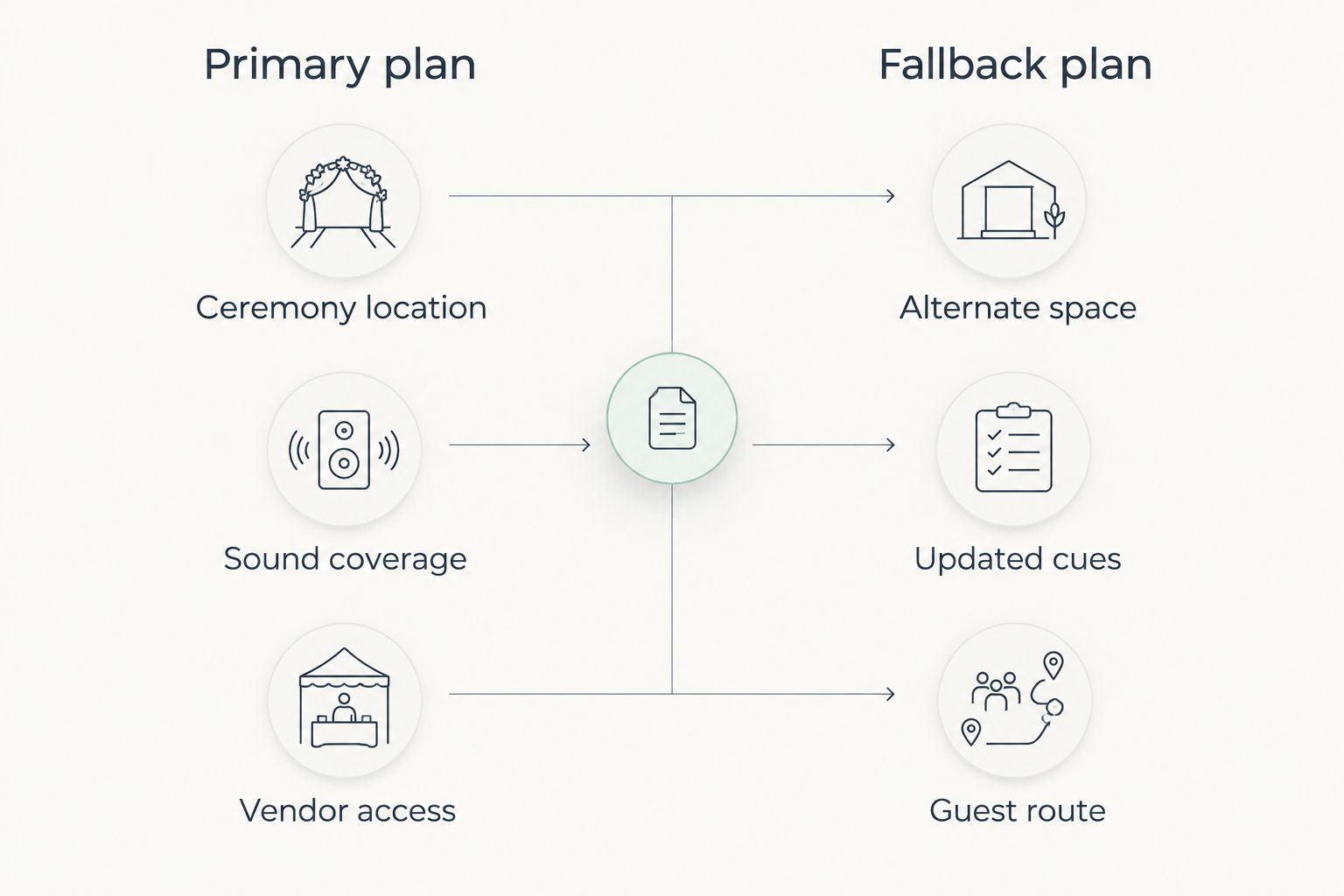
A weather backup needs a location, authority, deadline, and communication path. Saying that the ceremony will move inside if needed leaves unanswered who makes that decision, when vendors receive it, and whether the fallback room is ready for audio.
Prepare one primary plan and one fallback plan. Keep both complete enough to use without rebuilding the event schedule. If a tent is part of either plan, review the separate requirements for a DJ setup for a tent or marquee reception.
- Name the person authorized to make the weather call
- Identify the exact fallback ceremony location
- Show where guests and vendors enter the alternate space
- Confirm how the DJ receives the final decision
- Prepare matching cue sheets for both locations
Coordinate the ceremony cues offline
Coastal venues can place the DJ, officiant, photographer, and wedding party far apart. Do not make a phone signal or last-minute message the only way to trigger a processional. Use an offline cue sheet that every lead vendor can read before guests arrive.
Give the DJ 2 named contacts: one ceremony contact and one reception contact. The couple should not be the default troubleshooting desk. A coordinator, trusted attendant, or another designated person can confirm when the processional is ready and when reception formalities should begin.
- Create a one-page list of songs and cue points
- Name the person who releases each processional group
- Give the DJ 2 contacts with distinct responsibilities
- Store one offline copy with the DJ and one with the ceremony lead
- Add pronunciation notes for every announced name
Rehearse transitions between event spaces
The transition from ceremony to cocktail hour is where a split-site plan either holds together or becomes confusing. Walk through what the guests do, what the wedding party does, and what the DJ must do after the recessional ends.
Build a 15-minute operating buffer into any transition that requires vendors to move, reset, or confirm equipment. The buffer is not extra entertainment time; it protects the published schedule from becoming dependent on an instant handoff.
- Define when ceremony audio ends and cocktail music begins
- Keep guest directions separate from wedding-party photo instructions
- Confirm whether any equipment must move between locations
- Give vendors a 15-minute buffer for a physical transition
- Start reception announcements only after the designated contact confirms readiness
Coastal wedding DJ setup options compared
The right structure depends on whether the wedding uses one space or several. Compare operating plans before comparing playlists because the layout determines how many transitions, contacts, and audio positions the day requires.
| Option | Best for | Main advantage | Key limitation |
|---|---|---|---|
| One DJ setup in one location | Ceremonies and receptions sharing the same covered space | Fewer equipment transitions and simpler cueing | Does not serve a distant shoreline ceremony point |
| Separate ceremony and reception audio plans | Lighthouse ceremonies followed by an indoor or tented reception | Each space receives a purpose-built plan | Requires clear responsibility for both setups |
| Venue ceremony audio plus wedding DJ reception service | Venues with confirmed in-house ceremony equipment | Reduces the DJ's ceremony setup requirements | Creates a vendor handoff that must be rehearsed |
| Wedding DJ with live ceremony musician | Couples combining amplified speech with live processional music | Separates spoken audio from musical performance | Adds another schedule, setup, and cueing relationship |
For a coastal wedding using distinct ceremony and reception spaces, separate audio plans are the clearest 2026 choice. One plan can still belong to the same DJ service, but the equipment, cueing, and responsibilities should be documented by location.
DJ-BrianC wedding DJ service is a relevant option for Maine couples who need professional wedding music and event support. Its limitation is the same one that applies to every provider: suitability cannot be confirmed until the venue rules and requested scope are matched to the current service agreement.
Plan your coastal wedding music
Discuss your Maine venue, ceremony cues, reception schedule, and music priorities.
Common mistakes coastal couples make
Treating the ceremony and reception as one setup
Two locations require two operating plans even when one DJ covers both. Couples create avoidable gaps when they assume ceremony speakers can move instantly to the reception or that venue audio will automatically connect with the DJ's system.
Choosing music before confirming the cue process
A correct song does not fix an unclear start signal. Every processional selection needs a person responsible for releasing the next group and a way to communicate that cue without depending on the couple.
Leaving the weather plan verbal
A verbal fallback is easy to interpret differently. The DJ, venue, officiant, photographer, and wedding party need the same alternate location and timeline in writing.
Ignoring vendor access
A scenic walkway that works for guests can be unsuitable for moving stands, speakers, and protected equipment. Confirm loading access, stairs, gates, parking, and setup windows before signing the final agreement.
Using the couple as the only contact
The couple will be occupied during arrivals, portraits, and formalities. Assign 2 contacts with separate ceremony and reception responsibilities so routine questions do not interrupt the wedding.
FAQ
What should I ask a lighthouse wedding DJ in Maine?
Ask about ceremony audio, reception coverage, power responsibility, weather changes, vendor access, microphones, and transitions between spaces. Match each answer to the venue’s written rules before signing.
Can one DJ handle both a lighthouse ceremony and an indoor reception?
Yes, one DJ can cover both when the service agreement defines the audio plan for each location. Confirm whether separate equipment or a physical move is required.
How much does a coastal Maine wedding DJ cost?
Request a current quote based on the date, locations, schedule, and requested services. A ceremony at one site and reception at another can require a different scope than a single-room wedding.
Do I need a microphone for an outdoor coastal ceremony?
A microphone plan is appropriate when guests need to hear vows, readings, or the officiant across an outdoor seating area. Confirm who supplies and operates each microphone.
What happens if weather moves the ceremony indoors?
The event follows the written fallback plan for location, audio, cues, and guest movement. One named decision-maker should notify every lead vendor through the agreed communication path.
When should I book a lighthouse wedding DJ in Maine for 2026?
Book after confirming the venue date and operating rules, then compare providers while your preferred professionals remain available. The correct lead time depends on the date and each provider’s calendar.
Is DJ-BrianC suitable for a coastal Maine wedding?
DJ-BrianC is best for Maine couples seeking a professional wedding DJ. Confirm the exact coastal venue, ceremony needs, reception plan, equipment scope, and current agreement before booking.
What should be on a coastal wedding DJ cue sheet?
Include each song, cue source, announced name, pronunciation note, location, and responsible contact. Keep an offline copy with the DJ and ceremony lead.
One last thing
The most useful 2026 planning document is not the playlist. It is a one-page location-and-cue sheet showing where each part of the wedding happens, who starts it, what guests need to hear, and which plan applies if the ceremony moves. Finish that page before refining song order.
Related guides
- DJ for outdoor and backyard weddings
- DJ for destination weddings in Maine
- Plan your wedding reception timeline with your DJ