Event Planning Help for Wedding Reception
The reception is where a wedding either settles into a great rhythm or starts feeling rushed, awkward, or harder than it should. That is why event planning help for wedding reception details matters so much. A beautiful venue and a good menu go a long way, but timing, guest flow, music, announcements, and coordination are what make the night feel easy for everyone in the room.
Most couples do not need more ideas. They need a solid plan, a clear timeline, and someone who understands how the evening actually moves from one moment to the next. The best receptions are not built on guesswork. They are built on preparation, flexibility, and the kind of experience that keeps small issues from becoming big ones.
What event planning help for wedding reception really includes
Reception planning is often misunderstood as decoration decisions and a list of songs. In reality, it covers the structure of the evening. It includes the order of events, the pacing of dinner and toasts, the transition into dancing, and the many practical details that guests may never notice when things are going well.
A strong reception plan usually starts with a timeline that makes sense for your venue, guest count, and style of celebration. A formal ballroom reception will move differently than a relaxed backyard event or a barn wedding in Maine. Some couples want a quick dinner and a packed dance floor. Others want more time for conversation, family photos, and a slower build into the party. Neither approach is wrong, but each one needs different timing.
Planning help also means coordinating expectations between vendors. Your entertainment team, caterer, photographer, and venue staff all play a part in how the night feels. If those pieces are not aligned, simple moments like introductions, cake cutting, or the first dance can get delayed or feel disjointed.
Why reception timing matters more than couples expect
One of the biggest mistakes in wedding planning is treating the reception as if it will naturally sort itself out. It usually does not. Guests respond to pacing. If dinner runs too long, the room loses energy. If formalities are stacked back to back with no breathing room, the reception can start to feel like a checklist instead of a celebration.
Good timing protects the mood of the night. That means knowing when to welcome guests, when to make announcements, and when to shift from dinner into dancing. It also means leaving room for real life. A few extra minutes for a delayed entrance, a last-minute family photo, or a longer-than-expected toast can keep the entire evening from feeling rushed.
This is where experienced event support makes a real difference. A professional who has handled many receptions knows how long transitions usually take, where delays tend to happen, and how to keep things moving without making guests feel pushed around.
The reception timeline should fit your crowd
Every wedding crowd is different. A reception with mostly family and older guests may respond best to earlier formal dances, clear announcements, and a music mix that welcomes several generations. A younger crowd may be ready to get on the dance floor quickly, especially if dinner service is efficient and the energy stays up.
It also depends on your priorities. If your reception is centered on dancing, the timeline should protect dance floor momentum. If the focus is conversation and a relaxed dinner, the entertainment approach should support that atmosphere rather than overwhelm it. The point is not to force every wedding into the same structure. The point is to create a plan that matches the people in the room.
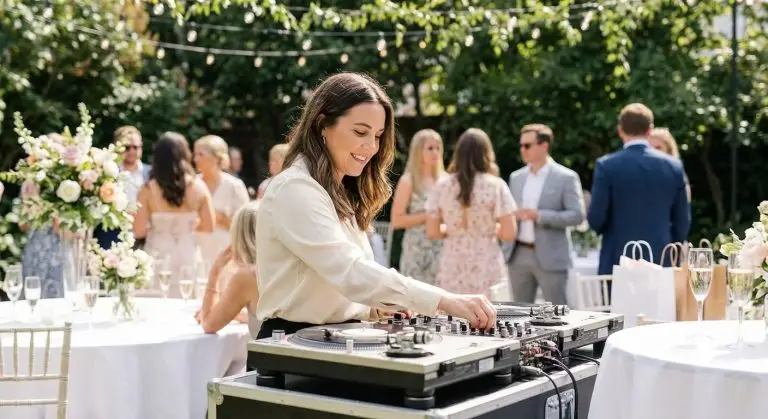
That is one reason entertainment matters far beyond music selection. A skilled DJ and MC is not just there to press play. They help guide the evening, keep guests informed, read the room, and adjust to the energy as it changes.
Music planning is part of event planning help for wedding reception success
Music has a direct effect on how guests experience the night. It shapes the mood during cocktails, supports the atmosphere during dinner, and drives the energy once dancing begins. But music planning is not simply making a long playlist of favorite songs.
A good reception music plan balances your personal taste with what works for your guests. That may mean choosing meaningful songs for key moments while also leaving room for crowd-friendly dance music later in the night. It may also mean identifying songs or genres you do not want played, which can be just as helpful.
This is where personalization matters. No two receptions should sound exactly the same. Couples should feel heard, but they should also benefit from professional guidance. Some songs are great in the car and flat in a ballroom. Some tracks that seem obvious on paper do not work well for mixed-age crowds. Experience helps bridge that gap.
Announcements, transitions, and guest flow
Many reception problems are really transition problems. Guests are not sure where to go. The wedding party is not lined up on time. A formal dance is ready to begin, but half the room is still at the bar. These moments may sound small, but they affect how polished the event feels.
Professional MC support keeps those moments organized. Clear introductions, well-timed announcements, and calm communication help guests stay connected to what is happening without feeling over-directed. It also takes pressure off the couple and their families, who should not have to manage the room during their own celebration.
Guest flow also includes practical details such as where speakers are positioned, how sound reaches the room, and whether people can hear important moments without the volume becoming uncomfortable. The right setup supports the experience. The wrong setup creates distractions.
How to avoid common reception planning issues
Most reception problems are preventable when planning starts early enough. One common issue is trying to fit too much into the schedule. Couples want entrances, dinner, toasts, dances, cake cutting, bouquet toss, special songs, and open dancing, all within a limited time frame. It can be done, but only if the order and timing are realistic.
Another issue is relying on too many separate contacts for things that should work together. When entertainment, timeline support, and event coordination are disconnected, communication gaps show up fast. A more organized approach reduces confusion and gives you a clearer picture of how the evening will run.
It also helps to think through guest experience from start to finish. What will guests hear when they enter the room? How will they know when dinner is ready? Will the dance floor feel inviting right away, or will it take too long to build momentum? Planning through the guest perspective often reveals details couples miss when they are focused on logistics alone.
Working with a reception professional versus a basic DJ
There is a big difference between someone who can play songs and someone who can help manage a wedding reception. A basic DJ may provide music. A seasoned wedding entertainment professional helps shape the event.
That difference shows up in the planning process as much as the performance. Experienced providers usually offer structured planning tools, song guidance, timeline input, and coordination support that keeps the reception organized before the wedding day even begins. On the event day, they are prepared to adapt if dinner service changes, speeches run long, or the crowd needs a different musical direction than expected.
For couples in Maine and nearby New Hampshire, that local experience matters too. Venues vary. Travel times vary. Guest expectations vary by setting and season. A provider who understands the pace and practical realities of weddings in this area brings more than equipment. They bring judgment.
At DJ-BrianC, that support is part of the value. The goal is not just to fill the room with music. It is to help couples feel confident that the reception will be organized, enjoyable, and handled professionally from the first announcement to the last dance.
What to look for when you want planning support
If reception planning help is important to you, ask specific questions before booking entertainment. Ask how the timeline is built, how music is customized, how announcements are handled, and how coordination works with your other vendors. Ask what happens if the schedule shifts during the event. Those answers tell you a lot.
You should also look for a provider who listens well. Experience matters, but so does the ability to tailor that experience to your priorities. A good partner will give guidance without taking over the wedding. They will help you avoid avoidable problems while still making the celebration feel like your own.
The right support makes the reception feel lighter for everyone involved. You get more freedom to enjoy the night. Your families are not stuck managing details. Your guests stay engaged because the evening has a natural flow.
A wedding reception should feel joyful, not like a series of moving parts you have to monitor. With the right planning help behind it, the night can feel exactly the way it should – warm, organized, and full of moments people remember for the right reasons.