Video DJ Setup With Screens for a Wedding (2026 Guide)
A video DJ setup for a wedding reception needs a minimum of two matched screens (or one LED wall at least 10 feet wide), a media server or video switcher, HDMI/Cat6 runs to each display, and roughly 90 minutes of dedicated load-in before doors open. The number that trips up most couples isn't the equipment count — it's venue power capacity and screen sightlines, which get finalized weeks after the gear is already booked.
- A video dj setup with screens wedding needs 2+ screens or one 10-foot LED wall, plus a 90-minute load-in window in 2026.
- Screens closer than 15 feet to guest tables cause glare complaints — distance matters more than screen size.
- DJ Brian C runs video DJ setups for Maine receptions and treats screens as a lighting-and-AV package, not an add-on.
- Backup playback gear is non-negotiable once screens are part of the reception — a frozen slideshow stops the room faster than a dead speaker.
Why this matters
Screens change the shape of a reception. Once guests are watching a slideshow or a live feed of the dance floor, the DJ booth stops being background and becomes a production hub. Couples in 2026 request screens for photo montages, live-streaming to remote guests, and looping monogram graphics during dinner — but most venue layouts weren't built with a second AV zone in mind.
The planning gap shows up in three places: power (screens and amps sharing one circuit trip breakers), sightlines (screens mounted behind the head table are invisible from half the room), and content format (a phone-shot video won't play cleanly on a 10-foot wall without conversion). None of these are hard problems. All of them get missed when the screen decision happens the week of the wedding instead of during the planning walkthrough.
How do you plan a video dj setup with screens for a wedding reception?
Work through this order, not the reverse — most setup failures come from picking screens before confirming power and sightlines.
- Walk the room and mark two screen zones — one visible from the dance floor, one visible from seated dinner tables. A single screen behind the DJ booth only serves guests facing that direction.
- Confirm dedicated power circuits with the venue coordinator before booking gear. Screens, amps, and lighting on one 15-amp circuit is the most common cause of mid-reception blackouts.
- Set the content format early — slideshow software, phone-shot video, and pre-recorded messages all need different file conversions. Lock this down at least two weeks out.
- Book a video-capable DJ, not a standard audio-only package. Running a media server alongside music and mic duties is a distinct skill set from mixing songs.
- Confirm your wedding reception timeline includes a slot for screen content — montage during dinner, live feed during the reception, or looped graphics during cocktail hour.
- Schedule a 90-minute load-in window minimum for two-screen setups, longer for LED walls, so calibration happens before guests arrive.
| Setup type | Screen count | Best for | Verdict |
|---|---|---|---|
| Dual 55-inch displays | 2 screens | Receptions under 150 guests | Buy |
| Single 10-foot LED wall | 1 wall | Statement backdrops, live-stream feeds | Buy for larger rooms |
| Projector + screen | 1 screen | Budget-limited indoor venues | Hold — check ambient light first |
| Single small monitor | 1 screen | Micro-weddings, elopements | Skip above 60 guests |
Two 55-inch screens: the standard 2026 reception setup
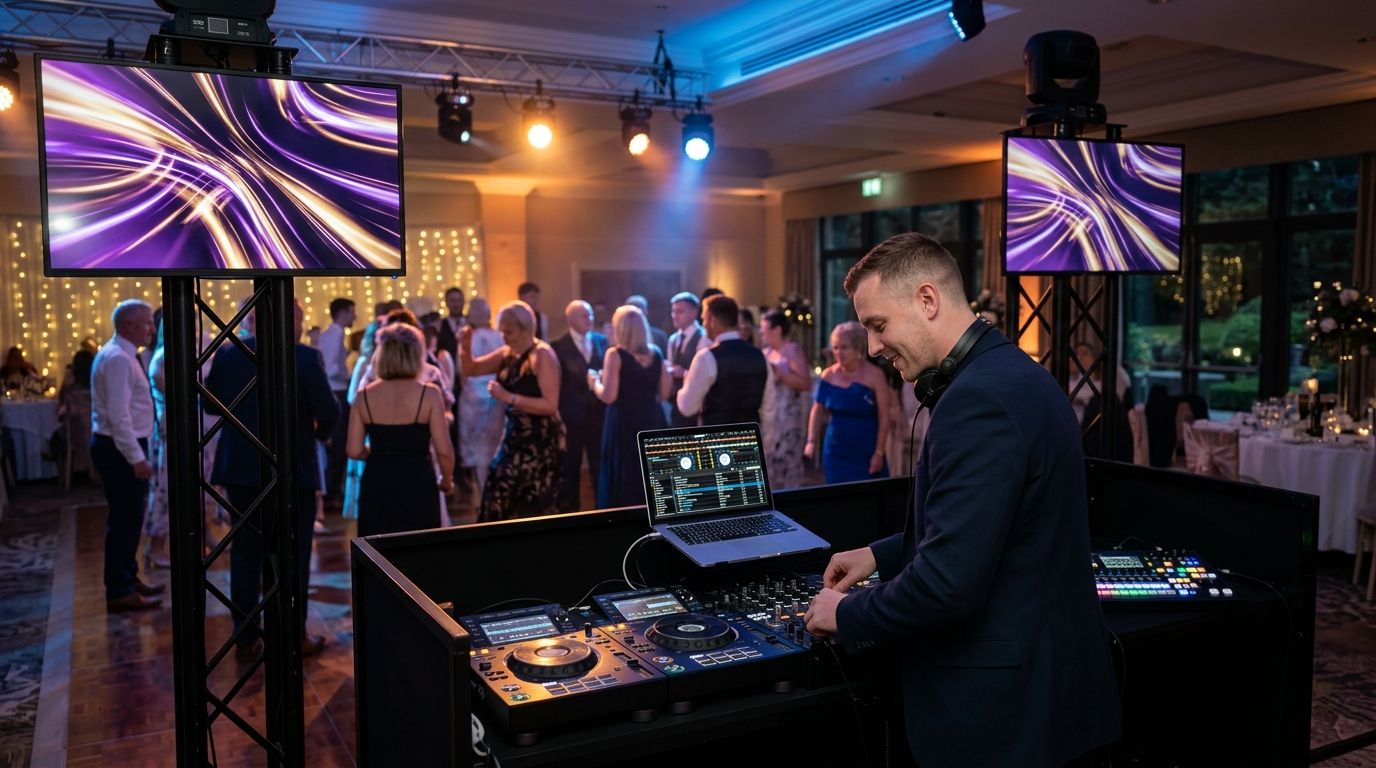
Two matched 55-inch screens is the baseline for a 100-150 guest reception. One goes near the dance floor for lyric or graphic overlays, the second sits where seated guests can see it during dinner without craning. This is the setup DJ Brian C recommends for most Maine receptions because it covers both zones without requiring structural rigging.
One 10-foot LED wall: the statement setup
A single 10-foot LED wall works when the reception has one clear focal point — a head table backdrop, a stage, or a live-stream camera position. It draws attention from across the room but only from one direction, so it's a weaker choice for rooms with an L-shaped or split floor plan.
Projector and screen: the budget-conscious setup
A projector paired with a pull-down screen rents for less than dual flat panels but loses contrast fast in any room with windows or string lighting. It's a reasonable choice for evening-only receptions in a fully dimmable room, and a poor one for anything with daylight exposure.
Why a video DJ setup with screens varies
- Guest count — a 60-person elopement needs one small monitor; a 200-guest ballroom reception needs two large screens or an LED wall.
- Room shape — L-shaped and split-level rooms need two screen zones minimum; a single open room can work with one central display.
- Power infrastructure — older venues and barns often run on limited circuits, which caps how many screens and amps can run at once.
- Content type — live montage editing, pre-recorded video, and looped graphics each demand different playback hardware and lead time.
- Mounting options — truss rental, wall mounts, or freestanding stands all change setup time and the load-in window needed.
- Backup requirements — once screens are part of the show, a second playback source becomes essential; review backup equipment redundancy planning before the reception.
“A frozen slideshow stops a reception faster than a dead speaker — screens need a backup path just like the sound system.”
Do you need two DJs to run screens and music at a wedding?
No — one experienced DJ can run screens, music, and mic duties together, provided the media server and mixer are set up before doors open. Two operators only make sense for receptions running a live camera feed alongside pre-recorded content, where someone needs to switch sources in real time.
How far should screens be from the dance floor?
Screens should sit at least 15 feet from the nearest guest table to avoid glare complaints and neck strain during dinner. Dance floor screens can sit closer, since guests there are standing and facing the display directly rather than seated at an angle.
Can a wedding DJ combine screens with uplighting?
Yes, and most 2026 reception packages combine the two — screens carry content while wedding reception lighting sets the room's color and mood. Running both from one operator keeps the transitions between dinner, speeches, and dancing tighter than splitting the jobs across two vendors.
Plan your video DJ setup now
Walk through screens, power, and timeline with a Maine wedding DJ before you book.
FAQ
How many screens does a wedding reception need?
Most receptions need at least 2 screens — one visible from the dance floor and one visible from seated dinner tables. Rooms under 60 guests can often work with a single display.
What size screen works best for a wedding reception?
55-inch displays cover receptions under 150 guests, while a 10-foot LED wall suits larger rooms or single-focal-point setups like a head table backdrop. Screen size should match the farthest viewing distance in the room, not just guest count.
Do wedding screens need their own power circuit?
Yes, screens should run on a dedicated circuit separate from sound and lighting. Sharing a 15-amp circuit across screens, amps, and uplighting is the most common cause of mid-reception power failures.
How early should screen content be submitted to the DJ?
Screen content such as slideshows, video montages, or looped graphics should be finalized at least 2 weeks before the wedding. Late file conversions are the top reason content does not play correctly on the day.
Is a projector or a flat-screen better for a wedding reception?
A projector works only in fully dimmable rooms with no window glare, while a flat-screen panel holds contrast in any lighting condition. Most 2026 indoor venues with natural light do better with flat panels.
Can screens replace a photo booth at a wedding reception?
No, screens and photo booths serve different purposes — screens display curated content while a photo booth captures live guest photos. Many couples run both, with screens looping earlier photo booth captures later in the night.
How close can a screen be to the dance floor?
Dance floor screens can sit closer than dinner-table screens since guests are standing and facing them directly. Keep at least 15 feet of clearance from any seated area to avoid glare complaints.
What happens if a screen fails during the reception?
A DJ running a backup playback source can switch content within minutes without stopping the music. Setups without a backup path risk a dead screen sitting blank for the rest of the night.
One last thing
The detail couples miss most in 2026 isn't screen size — it's the viewing angle from the back row of tables. A 10-foot LED wall mounted at eye level looks sharp from the front third of the room and washes out from anywhere behind it. Raising the mount 2-3 feet fixes most of that problem for free, before anyone spends a dollar on a bigger screen.
Related guides
- Best sound systems for outdoor wedding ceremonies
- How to plan a DJ setup for a tent or marquee reception
- Best LED dance floor rental options for wedding receptions