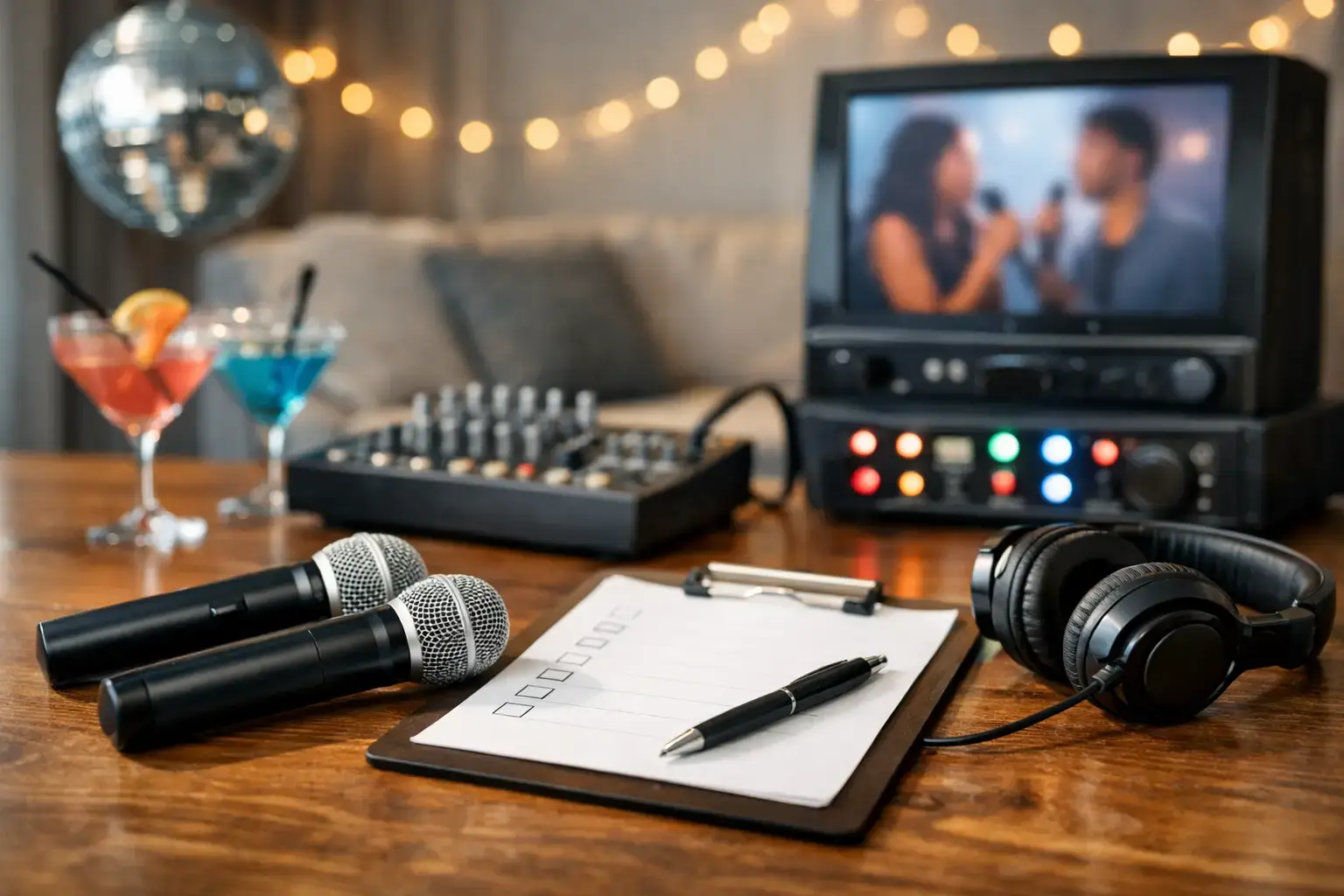
Karaoke Party Setup Checklist That Works
A karaoke party can turn flat in a hurry when the mic squeals, the song queue gets messy, or half the room cannot hear the singer. That is why a solid karaoke party setup checklist matters. The best events feel easy for guests, but behind that easy feeling is good planning, reliable equipment, and a host who has thought through the details before the first song starts.
Why a karaoke party setup checklist saves the night
Karaoke is different from background music at a party. It asks guests to step forward, hear themselves clearly, follow lyrics, and stay excited while waiting for their turn. If any one part of that chain breaks down, people lose confidence fast.
A good setup keeps the energy moving. It also protects the host from small problems becoming big distractions. When your sound is balanced, your singers know where to go, and your song rotation is under control, the room stays focused on having fun instead of troubleshooting.
That matters whether you are planning a birthday, bar event, school function, company party, or wedding after-party. Different crowds need different pacing, but they all respond well to an organized experience.
Karaoke party setup checklist for the room and layout
Start with the physical space before you think about the playlist. Karaoke needs more than a speaker in the corner. Guests should be able to see the lyrics, hear the performance, and move in and out of the singing area without awkward congestion.
Place the performance area where it feels visible but not exposed. In a private party, that may be near the main seating area so people naturally gather around. In a larger function, it may work better off to one side so non-singers can still talk without competing with the sound. There is no single right answer here. It depends on the size of the room and whether karaoke is the full event or one part of it.
Make sure singers have a clear path to the mic. If they need to squeeze between tables or cross in front of the speaker, you are creating hesitation before they even start. Keep drinks and food tables away from cords and equipment. This is both a safety issue and a practical one.
Sightlines matter too. If only the singer can see the lyrics comfortably, people will lose interest in participating. Position the lyric screen high enough to be visible and angle it to avoid glare from windows or overhead lighting.
Sound equipment that actually works
The heart of any karaoke setup is dependable sound. You need a quality microphone, speakers sized appropriately for the room, and a system that handles music and vocals without distortion. Too little sound leaves the party flat. Too much sound makes conversation impossible and can push shy singers away.
Wireless microphones are convenient, especially for energetic crowds, but they need a strong signal and fresh batteries. Wired microphones are simple and reliable, though they can create more clutter if the stage area is tight. Either can work well if managed properly.
You also need balanced audio levels. The vocal should sit clearly above the music, but not so far above that every breath and handling noise becomes obvious. This is where experience matters. Karaoke sound is not just about volume. It is about helping average guests feel comfortable enough to perform.
Feedback is one of the fastest ways to kill momentum. Keep microphones behind the speakers when possible, and test the room before guests arrive. A short sound check can save you from constant level adjustments later.
Build a song system before guests walk in
A karaoke party lives or dies by how easy it is to pick songs and get into the queue. If guests do not know what is available or how to request a track, you will spend the night answering the same question instead of managing the event.
Use a song library that is broad, current, and organized. Variety matters more than people realize. One group may want country classics, another may lean toward pop sing-alongs, and another may want rock anthems or old-school dance favorites. If your catalog is too narrow, participation drops after the first wave of singers.
The request process should be simple. Guests should know where to browse, how to submit a song, and when they can expect their turn. If you are hosting for a large crowd, a clearly managed rotation is essential. Nothing frustrates a guest faster than feeling skipped or forgotten.
This is also where judgment comes in. Some songs are crowd pleasers. Some are five-minute energy drains. A strong host keeps the rotation fair while also watching the room. Sometimes the right choice is to move from a slow ballad into a high-energy favorite to bring the crowd back up.
The host role matters more than most people expect
A karaoke setup is not only equipment. It is also flow. Someone needs to welcome singers, keep the order moving, make quick adjustments, and encourage participation without forcing it.
That hosting role can make a huge difference, especially early in the event. Most groups need a little warming up. A good host reads the room, invites the right first singers, and keeps the tone upbeat and comfortable. The goal is not to pressure people. The goal is to make joining in feel easy.
For mixed-age or mixed-interest events, the host also helps balance the experience. You may have guests who want to sing all night and guests who only need one favorite song. Managing that fairly keeps karaoke from feeling dominated by a few regulars.
Professional emcee skills help here. Clear announcements, steady pacing, and confident transitions make the whole night feel more polished.
Timing, pacing, and crowd energy
One of the most overlooked parts of a karaoke party setup checklist is timing. Karaoke works best when it starts at the right moment. Too early, and guests are still settling in. Too late, and people may already be tired or leaving.
At many private events, it helps to begin after food, introductions, or formal moments are finished. That gives guests time to relax before being asked to participate. In bar or public settings, a gradual build often works better than opening immediately with full volume.
Think about how long the event will run and how many singers you realistically expect. In a smaller group, karaoke can carry the entire night. In a larger event, you may want a mix of karaoke and dance music to keep everyone engaged. That flexibility is often what turns a good event into a great one.
You should also plan for the first three songs. This sounds minor, but it is not. A strong opening set changes the room. Well-known, fun songs from confident participants can break the ice quickly and encourage others to sign up.
Small details that prevent big problems
A few practical checks can save you from avoidable trouble. Test every microphone before guests arrive. Confirm battery levels if you are using wireless gear. Tape down or secure cords in traffic areas. Keep water available near the performance area, but not on the equipment table.
Have a backup plan for common issues. That may mean a second mic ready to go, extra batteries, or an alternate way to manage requests if the original system gets backed up. Guests may never notice these details, and that is the point.
It also helps to set expectations with the venue or host in advance. Know the event timeline, any volume limitations, and whether there are announcements or special moments that need to be worked into the schedule. Karaoke is more successful when it supports the overall event rather than competing with it.
When hiring a professional makes more sense
For a casual get-together at home, a basic setup may be enough. For a wedding, company party, packed bar night, school event, or milestone celebration, the stakes are different. You are not just trying to play songs. You are trying to create an experience that feels easy, fun, and well run.
That is where professional entertainment support pays off. Experienced karaoke hosts know how to tune a room, organize a rotation, keep guests engaged, and solve problems before they affect the crowd. They also bring the confidence that comes from handling different room sizes, age groups, and event styles.
For planners who do not want to spend the night managing sound, troubleshooting equipment, or sorting out song order, working with an experienced karaoke DJ can remove a lot of pressure. In Maine event settings where guests range from reserved to ready-to-perform, that steady hand matters.
A karaoke party should feel spontaneous, but the best ones are carefully prepared. If you want your event to sound better, move smoother, and keep guests involved from the first song to the last, Call DJ-BrianC at (207) 212-6560 to book or have your questions answered!