Maine Wedding Ceremony Audio Guide
A wedding ceremony can be absolutely beautiful and still fall flat for half the guests if they cannot hear a word. The vows matter. The reading from a grandparent matters. The officiant’s opening remarks matter. That is exactly why a maine wedding ceremony audio guide is not just a technical checklist – it is part of making sure your ceremony feels real, clear, and meaningful for everyone present.
For many couples, ceremony audio gets less attention than the playlist, the flowers, or the reception timeline. That is understandable. The ceremony is usually short, and people assume a quiet crowd and a good voice will carry the moment. In practice, Maine weddings often deal with wind, ocean air, outdoor spaces, barns with echo, tented setups, or guest counts large enough that natural voice projection simply is not enough.
Why ceremony audio matters more than most couples expect
If guests miss the vows, they miss the emotional center of the day. If they cannot hear the officiant, people start shifting, whispering, and losing focus. Even a heartfelt ceremony can feel distant when the sound is weak or inconsistent.
Good audio does not need to feel intrusive. In fact, when it is handled properly, most people barely think about it. They simply hear every word without strain. That is the goal.
There is also a big difference between music sound and spoken-word sound. A speaker that can play a song loudly is not automatically set up well for an officiant, a couple speaking softly, or a reader who holds a microphone too far from their mouth. Ceremony audio needs planning, the right equipment, and someone who understands how live events actually move.
A practical maine wedding ceremony audio guide for real venues
Maine offers incredible ceremony settings, but each one creates different sound challenges. A rocky coastline can be stunning, but wind noise and open air work against speech clarity. A barn may look warm and inviting, yet reflective walls can create echo that muddies every sentence. A backyard ceremony feels personal, but power access, setup distance, and guest spacing can become issues fast.
That is why there is no one-size-fits-all setup. The best audio plan depends on the location, guest count, ceremony format, and whether live musicians, readers, or multiple officiants are involved.
For a smaller indoor ceremony, one properly placed speaker and a clean microphone setup may be enough. For a larger outdoor ceremony, you may need more coverage so the back rows hear clearly without the front rows feeling blasted. The right system should match the room or outdoor footprint, not just the idea of a wedding.
The core pieces of ceremony audio
At minimum, most wedding ceremonies need three things handled correctly: voice amplification, music playback, and operator control. Voice amplification means the officiant and, in some cases, the couple or readers are mic’d clearly. Music playback covers prelude, processional, any special ceremony songs, and recessional. Operator control matters because cues need to happen at the right moment, with the right volume, and without fumbling.
Wireless microphones are often the best choice because they keep the ceremony area clean and flexible. But wireless only works well when the equipment is dependable and properly tested. Cheap or poorly coordinated wireless systems can drop out at exactly the wrong time.
Music playback should also be simple and organized. Ceremony music is not the place for hunting through a phone or guessing which version of a song is next. Every cue should be ready, labeled, and easy to start cleanly.
Microphone choices and what usually works best
The officiant is usually the most important person to mic because they speak throughout the ceremony and often stand close enough to the couple for vows to be picked up naturally. A compact wireless lapel mic or headset can work very well, depending on the officiant’s comfort and attire.
Handheld wireless microphones are useful for readings or musical performances, but they require people to use them properly. That is the catch. Many readers hold the mic too low or too far away, which makes volume uneven and difficult to fix in the moment.
If the couple is soft-spoken, extra planning helps. Some ceremonies are intimate in tone, and that is lovely, but intimate does not have to mean inaudible. In those cases, a setup that captures both officiant and couple more effectively may be worth discussing.
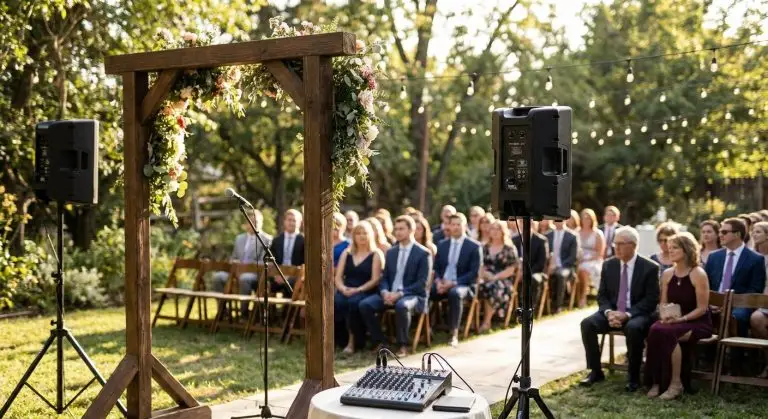
A microphone stand at a ceremony can be helpful for a reading or singer, but it depends on the look you want. Some couples prefer a cleaner visual setup, while others care more about absolute consistency in sound. This is one of those trade-offs where the best answer depends on priorities.
Outdoor weddings need extra attention
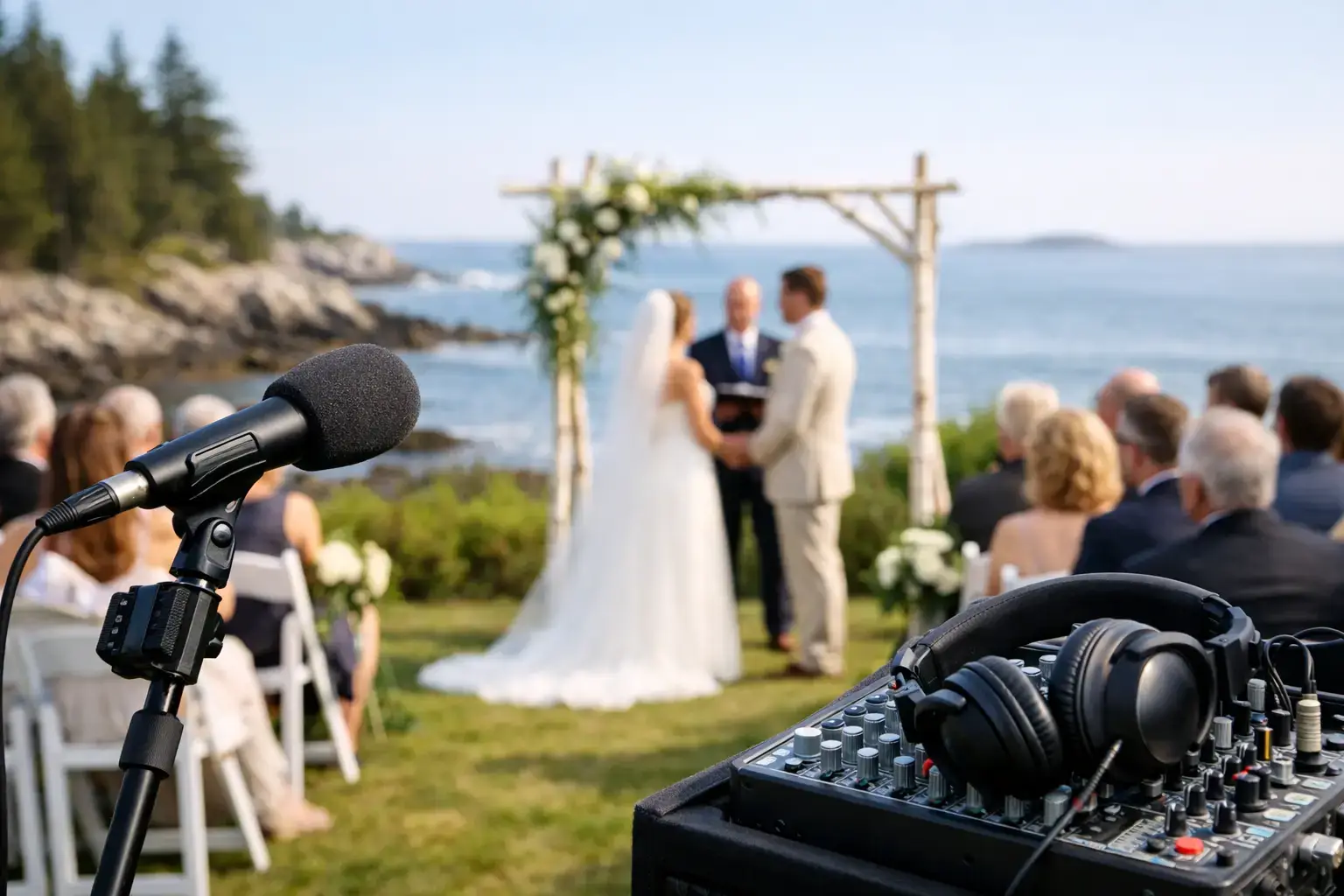
Outdoor ceremonies in Maine are beautiful for obvious reasons, but sound behaves differently outside. There are no walls to help contain the voice, and even a light breeze can reduce clarity. Add waves, traffic, birds, or nearby guests, and spoken words can disappear quickly.
Wind protection on microphones is essential. Speaker placement matters too. If speakers are aimed poorly, guests may hear volume without understanding the words. Clarity is more important than sheer loudness.
Outdoor power and setup timing should never be an afterthought. If the ceremony space is far from the reception area, that usually means a separate system or a carefully planned transition. Trying to repurpose reception sound at the last minute is where avoidable problems start.
Common ceremony audio mistakes
The most common mistake is assuming no sound system is needed because the ceremony will be “small.” Even 40 or 50 guests spread across chairs outdoors can make speech hard to hear. Another frequent issue is using one basic speaker for everything without checking whether spoken voices are actually clear from the back row.
Last-minute playlists are another risk. If songs are not edited, confirmed, and lined up in order, processional timing can get awkward. This is especially true when there are multiple entrances or a ceremony with cultural or family traditions that require precise cues.
Then there is the testing problem. A quick power-on check is not enough. A proper sound check should happen from the guest area, not just next to the equipment. What sounds fine at the mixer may sound thin or muddy where people are sitting.
Questions to ask before your ceremony
When planning your setup, ask who will manage the ceremony audio from start to finish. Ask how microphones will be assigned, how wind or room acoustics will be handled, and what backup plan exists if something fails. Experience matters here because weddings do not pause while someone troubleshoots under pressure.
You should also ask whether your ceremony music cues will be reviewed ahead of time. That is a small planning step that makes a big difference. It helps your entrance feel smooth and prevents confusion about when a song starts, fades, or stops.
If your venue has specific restrictions or a challenging layout, bring that up early. Stone patios, waterfront spaces, barns, and tented sites all affect setup decisions. The more details are known in advance, the more confidently the ceremony can run.
How professional coordination changes the experience
Strong ceremony audio is not only about gear. It is about preparation and timing. When someone experienced is overseeing the setup, the officiant is guided properly, the readers know what to expect, and the music cues happen without awkward delays.
That kind of support reduces stress for couples and for family members who would otherwise get pulled into managing equipment. Nobody wants a wedding guest adjusting a speaker five minutes before the processional.
This is where working with an experienced event professional can make a real difference. A well-run ceremony sounds natural, feels polished, and lets guests stay connected to the moment instead of wondering what was just said.
If you are comparing options, look beyond whether someone can play music. Ask whether they understand ceremony flow, speech intelligibility, backup planning, and venue-specific challenges. Those details are what protect the most meaningful part of the day.
Your ceremony only lasts a short time, but the impact of hearing every vow, every laugh, and every welcome lasts much longer. If you want dependable support from a seasoned local professional who understands how to make wedding moments clear and stress-free, Call DJ-BrianC at (207) 212-6560 to book or have your questions answered!