
Corporate Party Music Planning That Works
When the room goes quiet between conversations and people start checking their phones, the problem usually is not the food or the venue. It is often the soundtrack. Good corporate party music planning keeps energy moving, supports the tone of the event, and helps guests feel comfortable enough to stay engaged.
For company events, music does more than fill space. It sets expectations the moment guests walk in. It tells people whether the night is polished and formal, relaxed and social, or built for a full dance floor later on. If the music misses the mark, the whole event can feel slightly off, even when everything else is well organized.
Why corporate party music planning matters more than people expect
A corporate event usually serves more than one purpose. It may be a holiday party, an employee appreciation night, a client-facing celebration, a fundraiser, or a team milestone. That means the music cannot be chosen like it would be for a backyard party or even a wedding. The crowd is broader, the age range is wider, and the expectations are different.
Some guests want to network. Some want to relax. Some are ready to dance if the mood gets there. A smart music plan respects all three groups. That balance is what separates a well-run event from one that feels awkward or disjointed.
The biggest mistake is assuming a playlist alone will handle it. A corporate event has moving parts. There may be cocktails, dinner, introductions, awards, speeches, and an open-floor social period. The music has to support each phase without pulling attention at the wrong time. Volume, tempo, and song selection all need to change as the event progresses.
Start with the purpose of the event
Before choosing genres or favorite songs, define what success looks like. If the goal is conversation and relationship-building, music should be present but never dominant during the early part of the evening. If the goal is celebration after a major company win, the event may need a much stronger shift into high-energy music later on.
A holiday party often benefits from broad, familiar music that feels festive without overdoing seasonal tracks. An awards banquet calls for polished background music, clear transitions, and stronger emphasis on timing. A staff party may allow more personality and a bigger dance segment. It depends on the crowd, the company culture, and whether leadership wants the event to feel formal or relaxed.
This is where experience matters. Music should match the company, not just the planner’s personal taste. A room full of mixed ages and departments will respond better to recognizable, well-timed selections than to a narrow niche playlist.
Know your audience before building the soundtrack
Corporate crowds are rarely one-size-fits-all. You may have executives, office staff, production teams, clients, spouses, and guests all in the same room. That creates a different challenge than entertaining a crowd that already shares the same tastes.
The safest approach is not boring music. It is inclusive music. That means choosing songs and styles that are broadly appealing, easy to enjoy, and appropriate for a professional setting. In most cases, clean versions matter. So does avoiding music with lyrics or themes that can make guests uncomfortable in a business environment.
That does not mean the music has to feel stiff. It just needs to be curated with awareness. A strong corporate mix often pulls from several decades and genres, then adjusts based on real-time crowd response. Some groups will respond to Motown, classic rock, and 80s favorites early, then shift into 90s, 2000s, and current hits as the night loosens up. Others may prefer contemporary pop, light country, or danceable throwbacks from the start.
Build the night in phases
One of the best ways to approach corporate party music planning is to think in chapters rather than one long playlist. Different moments need different energy.
Arrival and cocktail hour
Guests are settling in, greeting coworkers, and getting comfortable. Music here should feel welcoming and upbeat without demanding attention. Mid-tempo tracks, recognizable classics, and polished contemporary selections work well. The volume should allow easy conversation.
Dinner or social mingling
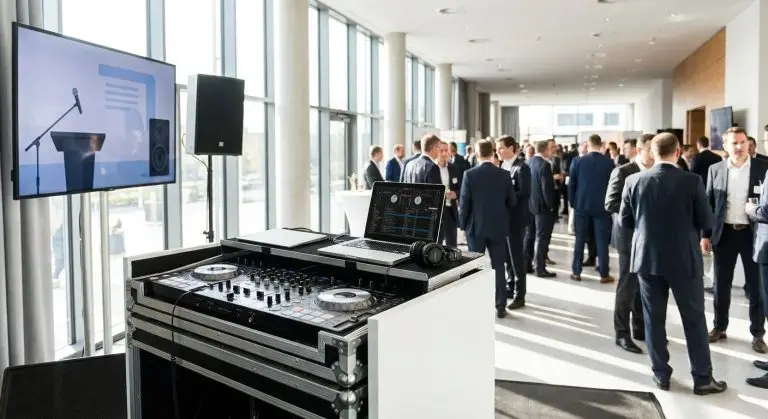
During food service or general networking, music should support the room rather than lead it. This is not the time for heavy bass or songs that pull people out of conversation. A professional DJ reads the room and keeps the sound present but controlled.
Formal program moments
If the event includes introductions, awards, announcements, or speeches, the music plan needs clean transitions. Brief music cues can add energy to walk-ups and presentations, but timing matters. The entertainment should enhance these moments, not turn them into a production that feels forced.
Celebration and dancing
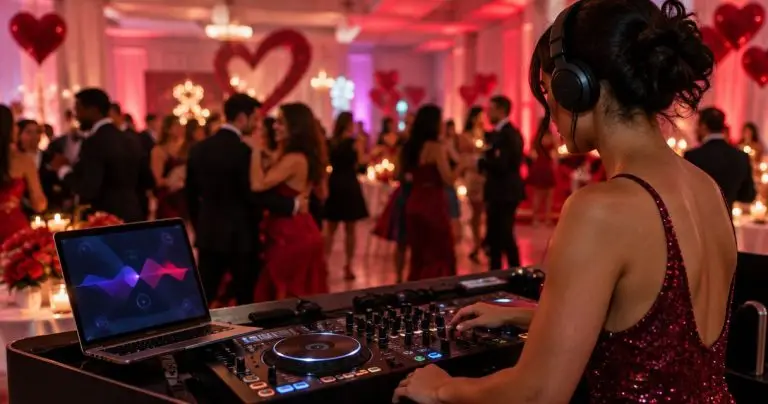
If dancing is part of the event, the jump in energy should feel natural. Going from background dinner music straight into peak dance songs can feel abrupt. A better approach is to build momentum with familiar, feel-good tracks that invite people in gradually. Once the floor fills, the music can open up more.
The right volume is part of the music plan
A common complaint at company events is that guests cannot talk without shouting. That is not always because the songs are wrong. Sometimes the volume is simply too high for the stage of the evening.
Professional sound control matters because a corporate event often changes purpose throughout the night. Early on, the priority may be conversation. Later, it may be excitement. The sound system and the person running it need to adapt to both.
This is another reason recorded playlists can fall short. A playlist cannot read the room, adjust for speech clarity, or smooth out transitions between formal and social moments. A skilled DJ can do all of that while keeping the event moving.
Requests can help, but they need boundaries
Song requests can be a great way to make guests feel included. They can also derail the tone of a corporate event if there is no filter. A good plan allows flexibility without sacrificing professionalism.
That usually means setting clear expectations in advance. If the company wants clean music only, that should be established. If the goal is broad appeal, requests should be weighed against the overall flow of the night. The right song at the wrong time can empty a dance floor just as quickly as the wrong song altogether.
It helps to work with an entertainer who can honor requests when they fit and redirect when they do not. That kind of judgment protects the event without making it feel rigid.
Corporate party music planning works best with coordination
Music should not operate separately from the rest of the event. It should be coordinated with the schedule, venue layout, speaking program, and crowd expectations. If there is an awards segment, the DJ needs the order of events. If dinner service may run late, the music has to flex. If the company wants a polished presentation, the MC side of the entertainment matters just as much as the songs.
That level of planning reduces stress for organizers. Instead of worrying about when to lower the music, cue an introduction, or shift the mood, they can focus on their guests. For many businesses, that peace of mind is just as valuable as the entertainment itself.
In Maine and nearby New Hampshire, company events often bring together employees and guests from different offices, backgrounds, and age groups. That makes flexibility especially important. A dependable DJ does not show up with one fixed formula. He shows up with a plan, the right equipment, and the experience to adjust when the room tells him something different.
What to look for in a DJ for a corporate event
Not every DJ is built for corporate work. A strong corporate entertainer understands timing, professionalism, and how to read a mixed crowd. He knows when to stay in the background and when to help lift the room’s energy. He also understands that a company event is still a business environment, even when the goal is fun.
Look for someone who offers planning support, a broad music library, clear communication, and the ability to handle announcements confidently. That combination makes the event feel more organized from start to finish. It also lowers the risk of awkward gaps, uneven sound, or music choices that do not fit the audience.
The best results come from treating music as part of the event strategy, not a last-minute add-on. When the soundtrack fits the purpose, respects the audience, and changes with the night, guests notice. They stay longer, interact more easily, and remember the event for the right reasons.
If you are planning a company celebration and want experienced help with music, flow, and guest engagement, Call DJ-BrianC at (207) 212-6560 to book or have your questions answered!