Wedding Ceremony Music Checklist That Works
The wrong ceremony song does not just feel off for a few seconds. It can throw the timing of the processional, create awkward pauses, or make a meaningful moment feel rushed. A solid wedding ceremony music checklist helps you map every cue ahead of time so your ceremony feels smooth, personal, and well paced from the first guest arrival to the final walk back up the aisle.
For most couples, the challenge is not finding music they like. It is narrowing down the right songs for the right moments, making sure each one fits the length of the walk, and avoiding last-minute confusion about who starts when. That is where a little structure makes a big difference.
What to include in your wedding ceremony music checklist
Your ceremony music should follow the real flow of the event, not just a list of favorite songs. That usually starts with prelude music as guests arrive, then moves into the processional, any special ceremony moments, the recessional, and often a short postlude while guests transition to the next part of the day.
Prelude music sets the tone before the ceremony begins. This is usually light, welcoming background music played for about 15 to 30 minutes while guests are seated. It should feel warm and appropriate for the setting without pulling too much attention. If you love emotional ballads, this is often a better place for them than during the processional, where pacing matters more.
The processional includes several moving parts, and this is where couples most often need help. You may have music for grandparents, parents, the wedding party, flower girl or ring bearer, and a separate entrance for one or both partners getting married. Some couples use one song for everyone. Others want a more customized build. Either approach can work as long as the transitions are clear.
If you are including a unity ceremony, candle lighting, sand ceremony, private vow moment, or any cultural or religious tradition, those moments may need their own music or quiet underscore. Not every ceremony needs this. In some cases, silence is more powerful. It depends on your officiant, your venue, and how many moving parts are happening at once.
The recessional is the celebratory exit after the ceremony. This is usually the easiest song to choose because it can be upbeat, joyful, and a little more fun. Guests respond to that energy right away. If you want the ceremony to end on a high note, this is the place to do it.
Postlude music is often overlooked, but it helps avoid a dead moment after the couple exits. While guests stand, hug, and begin moving toward cocktail hour or photos, light music keeps the transition feeling organized.
A practical wedding ceremony music checklist by moment
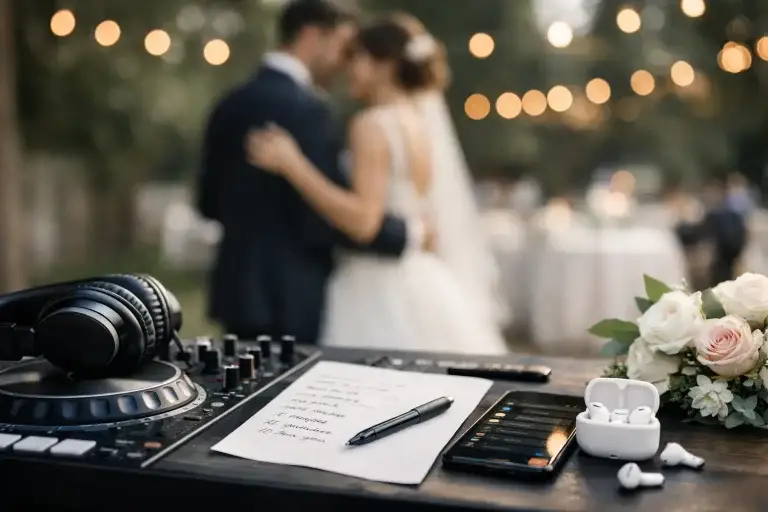
When you build your wedding ceremony music checklist, think in order of appearance and movement. A typical list includes prelude music, seating of grandparents, seating of parents, wedding party entrance, partner entrance, ceremony feature music if needed, recessional, and postlude.
That sounds simple on paper, but the real detail is in timing. A song that feels perfect at home may have a long instrumental intro that delays the entrance. Another song may have lyrics that start too abruptly for a formal walk down the aisle. This is why ceremony music should be chosen with real event timing in mind, not just emotion.
For example, the song for the final entrance should match the pace of the walk. If the aisle is short, a dramatic two-minute buildup may never reach the part you actually wanted guests to hear. If the aisle is long or the entrance includes multiple people, a very short song may need editing or looping to avoid an awkward stop.
This is also where professional coordination matters. Someone needs to know exactly when to start the song, how to fade it if needed, and how to shift to the next cue without making it obvious. Those small details have a big effect on how polished the ceremony feels.
How to choose songs that fit the moment
The best ceremony music is not always the most popular choice. It is the music that fits your personality, your venue, and the emotional tone you want guests to feel.
If your ceremony is traditional, instrumental pieces, piano versions, acoustic covers, and timeless classics often work well. They feel elegant without becoming distracting. If your style is more modern or relaxed, you might choose meaningful singer-songwriter tracks, soft pop covers, or cinematic instrumentals. Outdoor ceremonies often sound best with music that feels open and simple rather than too heavy or layered.
Lyrics matter too. Couples sometimes fall in love with the melody of a song and overlook words that do not really fit a wedding ceremony. It is worth reading the lyrics all the way through, especially for a processional. A beautiful sound does not always equal the right message.
It also helps to think about contrast. If every song is slow and emotional, the ceremony can feel longer than it is. If every song is upbeat, it may lose the sense of significance. A balanced set of choices usually works best, with gentle prelude music, a meaningful processional, and a brighter recessional.
Common ceremony music mistakes to avoid
One of the biggest mistakes is waiting too long to make decisions. Ceremony music seems like a small task until couples realize they need several songs, exact timing notes, and a plan for transitions. That creates stress late in the planning process.
Another common issue is assigning music without thinking through who is actually walking and in what order. If that order changes, the song plan may need to change too. A checklist only works if it matches the final ceremony lineup.
Some couples also overcomplicate the music. There is nothing wrong with having separate songs for different entrances, but more songs means more cues and more room for error. Sometimes one well-chosen processional song is more effective than four different ones.
Volume is another detail people overlook. Ceremony music should support the moment, not overpower it. Guests should hear the song clearly, but they also need to hear the officiant and any live speaking. That balance takes planning and the right equipment.
Outdoor weddings deserve extra attention here. Wind, open space, and ambient noise can affect both music and microphones. If you are getting married in Maine, especially near the coast or in a garden or barn setting, your ceremony audio plan should be built for the environment, not treated like an afterthought.
Should you use live music, a DJ, or a playlist?
This depends on your budget, your priorities, and how much support you want during the ceremony.
Live music can be beautiful and memorable. It also requires coordination, setup planning, and flexibility if timing shifts. A solo musician may be a great fit for a simple ceremony, but more moving parts can require more management.
A playlist can seem cost-effective, but it often puts pressure on a friend or family member to handle cues at exactly the right time. That is harder than it sounds. Starting the wrong song, missing an entrance, or dealing with uneven volume can distract from the ceremony quickly.
A professional DJ gives you more control over exact versions, timing edits, microphone support, and live cue management. That is especially helpful when the ceremony includes multiple entrances, readers, custom vows, or an outdoor setup. It reduces stress because someone experienced is actively managing the flow instead of hoping the playlist runs correctly.
Final details to confirm before the wedding day
Once your wedding ceremony music checklist is complete, review it with your planner, officiant, and entertainment provider. Everyone should know the entrance order, song names, who cues each section, and whether any music needs to be faded, paused, or restarted.
It is also smart to confirm backup plans. If the ceremony runs late, if weather changes the setup, or if a processional order shifts, your music plan should still hold together. That kind of preparation keeps small changes from becoming visible problems.
A well-planned ceremony does not feel overproduced. It feels calm, intentional, and easy. Guests stay focused on the moment because the music supports what is happening instead of competing with it.
If you want help building a ceremony plan that sounds great and runs on time, working with an experienced wedding entertainment professional can save a lot of guesswork. Call DJ-BrianC at (207) 212-6560 to book or have your questions answered!