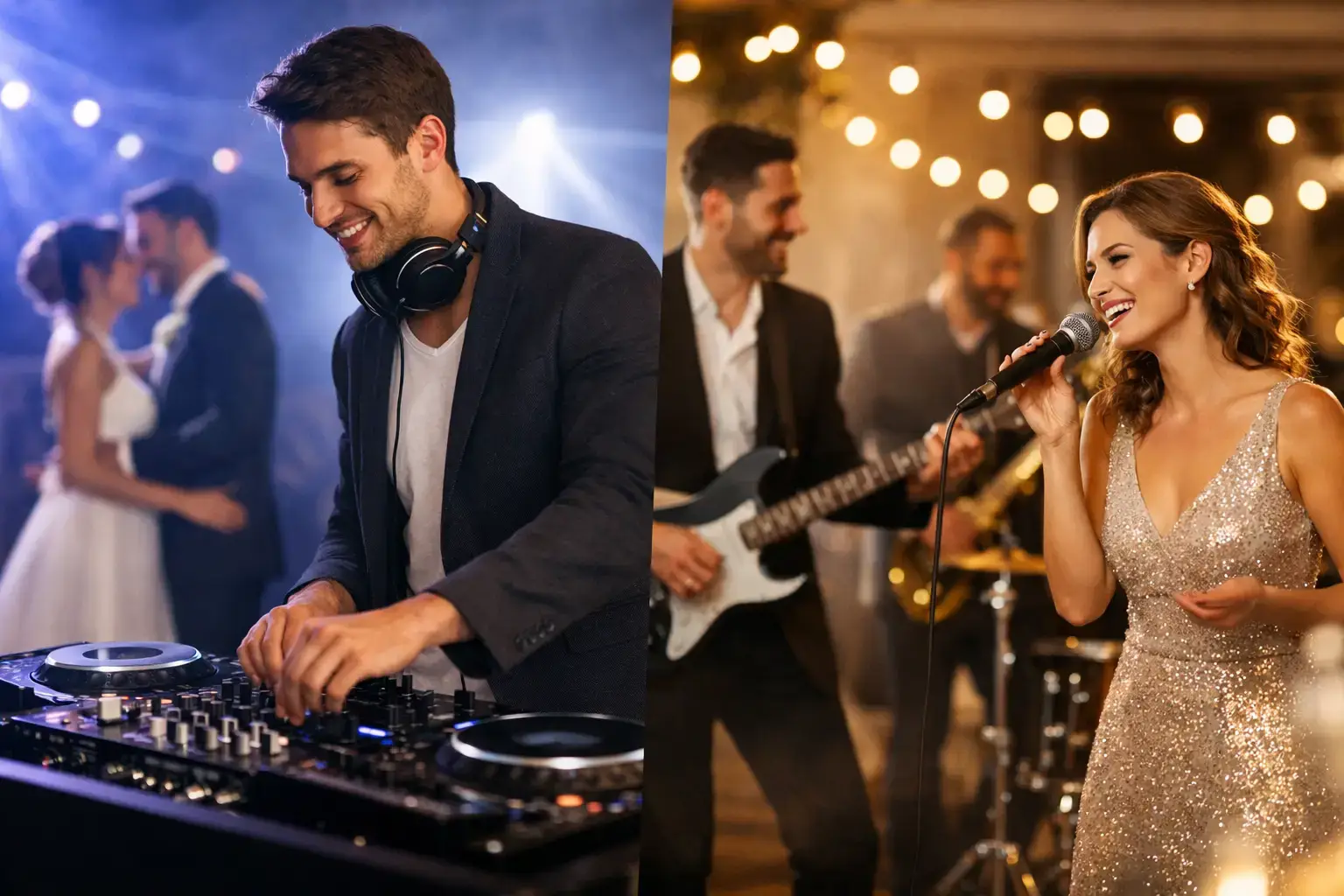
DJ vs Live Band Wedding: Which Fits Best?
The dance floor usually tells the truth.
A couple can love the idea of a live band, picture a packed floor, and still end up with guests drifting back to their tables after a few songs. Another couple can hire a skilled DJ, worry it will feel less personal, and then watch three generations stay out dancing all night. When couples compare a dj vs live band wedding, the right answer is rarely about which option sounds more impressive. It is about what fits your crowd, your budget, your venue, and the kind of celebration you actually want.
DJ vs live band wedding: what really changes the night?
Both options can create a great reception. Both can also miss the mark if they are not matched to the event. The entertainment you choose affects more than music. It shapes pacing, announcements, energy changes, transition timing, and how smoothly the reception moves from cocktails to dinner to dancing.
A live band brings a visible performance element. Guests are not just hearing music. They are watching it happen. That can add excitement, especially for couples who want the entertainment to feel like part of the show.
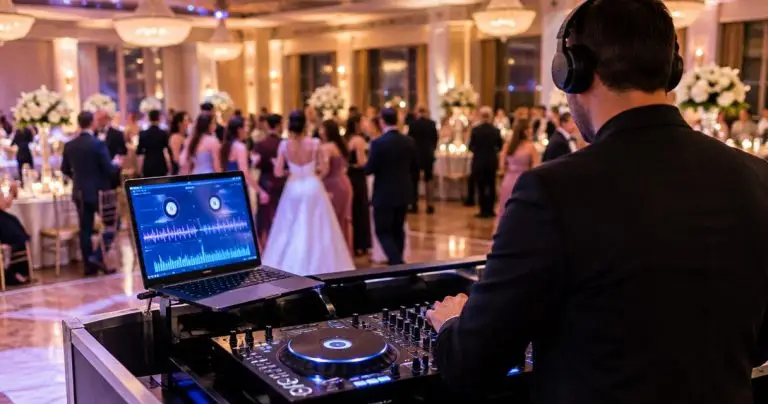
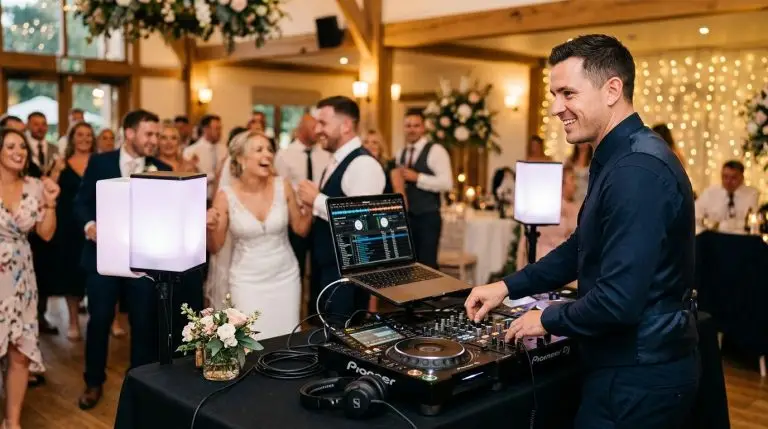
A DJ brings flexibility that is hard to beat. You get access to a much wider range of songs, tighter control over volume and timing, and usually a smoother way to handle the many moving parts of a wedding reception. For many couples, that convenience matters just as much as the music itself.
The biggest difference is music flexibility
This is often the deciding factor.
A live band can sound fantastic, but their song list is limited by what they rehearse well. Even strong bands usually have a set repertoire, and while they may learn a special song or two, they cannot realistically cover every style, decade, and request your guests might want.
A DJ can move from Sinatra to Motown to country to 90s hip-hop to current pop without needing to stop and reset the room. That matters at weddings because most receptions are not built around one musical taste. They include grandparents, college friends, coworkers, kids, and everyone in between.
If your goal is to please a broad crowd, a DJ usually has the advantage. If your goal is to create a concert-style feel built around a certain sound, a live band may be the better fit.
Cost matters more than many couples expect
A dj vs live band wedding comparison usually starts with style, but budget often brings the real clarity.
Bands typically cost more because you are hiring multiple performers, not one entertainment professional. There may also be extra needs tied to setup time, stage space, power, breaks, and sound support. In some cases, couples are surprised to learn that a band they love on social media may not be practical for their actual venue or budget.
A professional DJ is often the more cost-effective option while still covering key reception needs. That can leave room in the budget for lighting, enhanced sound, or planning support that improves the guest experience in other ways.
This does not mean cheaper is always better. It means value should be measured by what the entertainment can handle for you. If one vendor can manage music, announcements, event flow, and guest engagement with less complexity, that has real value on a wedding day.
Energy on the dance floor is not as simple as “band equals fun”
This is one of the biggest misconceptions couples run into.
A talented live band can absolutely create amazing energy. The visual presence of musicians, the live vocals, and the feeling of performance can be memorable. For some weddings, especially those with a crowd that loves live music, that works beautifully.
But a DJ has a different kind of advantage. A great DJ reads the room in real time and adjusts fast. If guests are not connecting with one style, the music can shift immediately. If the floor starts filling with a certain age group, the next songs can build on that momentum. If the newlyweds want elegant early-evening music and a more upbeat late-night party, that transition can happen naturally.
Bands have less room to pivot. They may need to stick to set lists, song groupings, or break schedules. Even excellent musicians cannot always change direction instantly the way a DJ can.
For receptions where the main goal is keeping the floor active for as many guests as possible, flexibility often wins over novelty.
Venue size and logistics can tip the decision
Some entertainment choices look great on paper and become difficult in the actual room.
A live band usually needs more space. That includes room for multiple performers, instruments, speakers, and sometimes a dedicated performance area. In smaller venues, that can reduce dance floor space or crowd the layout. Volume can also become an issue. Even a polished band may be too loud for certain rooms during dinner or conversation-heavy parts of the night.
A DJ setup is usually more compact and easier to adapt. That can be especially helpful at venues where space is limited or where the reception needs several mood changes throughout the evening. A professional DJ can also manage volume more precisely, which keeps the event comfortable for guests who want to talk without killing the party atmosphere.
For many Maine wedding venues, where room layouts can vary from ballrooms to barns to coastal function spaces, adaptability is a real advantage.
Timing and reception flow often favor a DJ
Couples sometimes focus so much on dancing that they forget how much of the reception depends on smooth coordination.
Introductions, first dances, parent dances, toasts, cake cutting, dinner music, and open dancing all need to happen in a rhythm that feels natural. Dead air, delayed announcements, or awkward transitions can make a reception feel disorganized even when the decor and food are excellent.
A professional DJ often acts as both entertainment provider and reception guide. That means helping coordinate timing with the venue, making clear announcements, keeping things moving, and adjusting the schedule when real life happens. Weddings almost never run exactly on paper. A vendor who can adapt calmly is worth a lot.
Bands can handle emcee duties in some cases, but not all do it with the same consistency or event-management focus. Their main role is usually performance. A DJ is more often set up to manage the full arc of the reception.
When a live band makes the most sense
A live band can be the right choice if music performance is central to your vision. Maybe you want a black-tie reception with a strong big-band feel. Maybe your families love classic rock, jazz, or soul performed live. Maybe you are planning a wedding where guests are likely to watch and enjoy the band as much as they dance.
A band also makes sense when the entertainment itself is part of the atmosphere you want guests to remember. If you want that visual wow factor and your budget and venue support it, live music can absolutely elevate the evening.
The key is being honest about whether that atmosphere matters more to you than song variety, flexibility, and simplified coordination.
When a DJ is the better wedding choice
A DJ is often the stronger fit when you want broad music selection, easy customization, and reliable control over the pace of the night. That is especially true for mixed-age guest lists, receptions with several formal moments, or couples who want fewer moving parts to manage.
A good DJ is not just pressing play. He is planning with you ahead of time, building the right music mix, handling announcements professionally, and adjusting throughout the night based on guest response. That combination helps reduce stress before and during the event.
For couples who want a polished, fun reception without guessing how the room will respond, a DJ is usually the most practical and dependable choice.
The best dj vs live band wedding question to ask
Do not ask which option is better in general. Ask which one is better for your wedding.
Think about your guest list first. Will your crowd respond better to a live performance or to a wide-ranging playlist that keeps everyone included? Think about your venue next. Is there enough space and the right setup for a band? Then think about your priorities. Is your goal to create a featured music performance, or is it to keep the night flowing, flexible, and full of danceable moments?
If you are comparing quotes, compare more than price. Ask what is included, how planning is handled, whether announcements are covered, how requests work, and how the vendor adapts if the timeline shifts. Those details often matter more than couples realize.
The right entertainment should make your wedding feel easier, not more complicated. If you want experienced guidance, dependable execution, and music that fits your crowd from the first entrance to the last dance, Call DJ-BrianC at (207) 212-6560 to book or have your questions answered!